

Where Does Porta Potty Waste Go?
Where Does Porta Potty Waste Go?
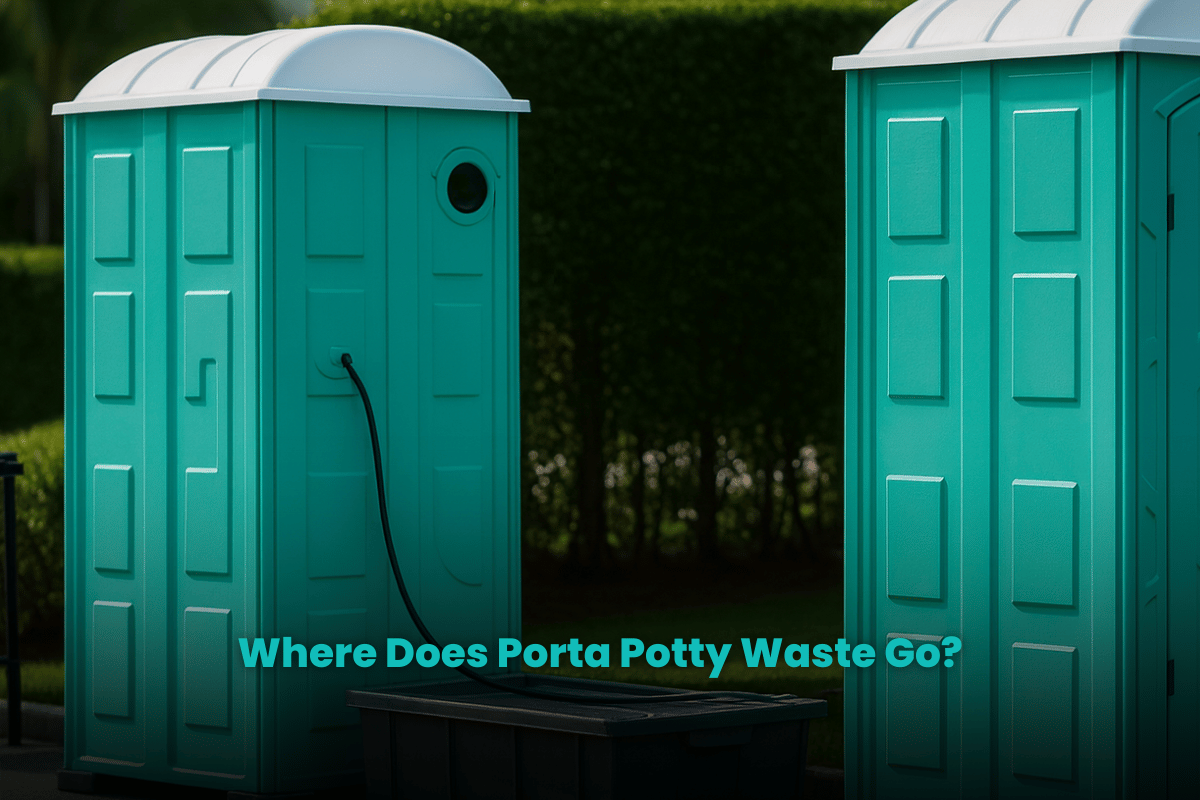
If you’re renting portable restrooms, one of the first questions that comes up is: where does porta potty waste go?
The answer matters because it affects hygiene, scheduling, and even compliance on your site. After waste is collected and hauled away, it follows a regulated process of safe transport and treatment.
We’ll cover how the cycle works from start to finish.
Key Notes
- Waste is vacuum-pumped into sealed trucks and transported to licensed wastewater treatment plants.
- Treatment plants screen, settle, biologically process, and disinfect waste before safe discharge.
- Only licensed carriers can transport sewage, and disposal at unauthorized locations is illegal.
How Porta Potty Waste Is Collected
Vacuum Pump-Out At The Unit
A service technician arrives in a specialized vacuum truck and connects a large suction hose to the unit’s clean-out port.
A high-powered vacuum pump pulls the waste from the holding tank into the truck’s sealed waste tank.
The system is closed to prevent spills and odor escape.
On-Site Cleaning & Reset
Once the tank is empty, the interior is rinsed and scrubbed. Surfaces are disinfected and wiped down. The technician refills the unit with fresh water and the appropriate chemical solution, then restocks supplies like toilet paper and hand sanitizer.
The goal is simple: you shouldn’t be able to tell the unit was used half an hour earlier.
One Visit, Multiple Units
For construction sites or events, a single visit usually services a bank of units in a logical route.
The truck may carry a freshwater tank for rinsing and a separate tank for the collected waste so everything happens efficiently on-site.
Where Does Porta Potty Waste Go?
Authorized Wastewater Treatment Plants
In most cases, waste goes to a municipal wastewater treatment facility, often called a POTW (Publicly Owned Treatment Works). Some areas also use specialized septage receiving stations.
For remote sites, licensed septic treatment facilities may be used.
Inside The Treatment Plant: What Happens Next
Here’s what typically happens once the truck offloads at a permitted facility:
Preliminary Treatment
Incoming waste is screened to remove debris like wipes, grit, and other solids that could damage downstream equipment. Heavy particles settle out early.
Primary Treatment
Wastewater sits in large settling tanks where solids sink and fats rise. The settled material becomes primary sludge, which is pumped off for separate processing.
Secondary Treatment
In aeration tanks, beneficial microbes consume dissolved and fine organic matter. This biological step is the workhorse of modern treatment and dramatically reduces pollutants.
Clarifiers then let the remaining solids settle.
Tertiary Treatment and Disinfection
Depending on the plant and local requirements, water may be filtered and disinfected using chlorine or UV.
The treated effluent is released to waterways under strict permits, or in some regions reused for approved non-potable purposes.
Sludge Treatment
The solids from primary and secondary steps are stabilized in digesters. The resulting biosolids may be dewatered and used as fertilizer where allowed, converted to energy, or disposed of safely in landfills. Nothing is left to chance.
permitted facilities is nonnegotiable and enforced by regulators.
How Often Porta Potties Should Be Serviced
Service frequency depends on headcount, duration, weather, and location.
A right-sized schedule keeps units clean, prevents overflows, and saves money by avoiding emergency callouts.
General Guidelines
- Construction sites: Weekly for standard crews of 10 to 20 workers. Increase to twice weekly or more with larger crews, multiple shifts, or hot weather.
- Special events: Ranges from daily service to every 4 to 8 hours for high-volume festivals and concerts.
- Residential or occasional use: Every 7 to 10 days is typical.
- Parks and recreation areas: Weekly or twice weekly, depending on foot traffic.
Even low-use units should be serviced at least every 14 days because chemicals degrade and odors increase over time.
Special Scenarios: Events, Construction, Disaster Relief
Large Events and Festivals
Units are placed for crowd flow and density, with clear service routes for trucks. High-traffic hours call for continuous or scheduled pump-outs, plus frequent restocking of paper and sanitizer. You’ll also see more handwashing sinks and accessible units.
Construction Sites
The focus is on reliability and cost control. Units typically sit in fixed locations and are serviced on a predictable weekly cadence.
The right number of units prevents lines and keeps crews productive.
Disaster Relief Zones
Rapid deployment, frequent servicing, and strict hygiene protocols are the priority. Coordination with health authorities is common. Waste handling follows the same rules, just at a higher tempo.
Equipment That Makes It All Work
Vacuum Trucks
Also called pump-out trucks or vacuum tankers, these carry a sealed waste tank and a separate freshwater tank. The vacuum pump, hoses, and toolkits are designed for quick, sanitary service.
Cleaning and Restock Kits
Technicians carry disinfectants, brushes, squeegees, and supplies like toilet paper and hand sanitizer to reset the unit after pump-out. You get a clean, ready-to-use restroom after each visit.
PPE and Safety Gear
Gloves, masks, and eye protection are standard. Companies also follow lockout, traffic, and lifting protocols to protect crews and the public.
Preventive Maintenance
Trucks are inspected and sanitized on a set schedule. Tank seals, pumps, and hoses are tested regularly to prevent failures on the road or on-site.
Regulations and Responsible Handling
Waste from portable restrooms is handled by licensed carriers and delivered to authorized facilities. Documentation of volumes and destinations may be required, and disposal sites need current permits.
In California, environmental standards are strict, and providers maintain compliant fleets and operating practices to meet them.
A few key ideas to keep in mind:
- Only licensed carriers should transport sewage from portable restrooms.
- Disposal must happen at permitted treatment plants or receiving stations.
- Providers maintain records for accountability and audits where required.
- Worker safety matters. PPE, training, and equipment maintenance are nonnegotiable.
Looking For Hassle-Free Porta Potty Service?
Fast delivery, clean units, and compliant waste handling.
Frequently Asked Questions
Do porta potty trucks mix all the waste together?
Yes. Vacuum trucks collect waste from multiple units into one sealed tank, but because everything goes to licensed treatment plants, it’s all safely processed together.
Can porta potty waste be recycled into something useful?
In many cases, yes. Treatment plants turn stabilized sludge into biosolids that can be used as fertilizer or converted into biofuel, depending on local regulations.
What happens if porta potties aren’t serviced on time?
Delays can cause unpleasant odors, overflow, and even health risks. That’s why regular servicing based on user volume is so important.
Are porta potty chemicals harmful to the environment?
Modern solutions are designed to be biodegradable and plant-compatible. Harsh chemicals like formaldehyde are no longer widely used, making today’s systems much safer.
Conclusion
So, where does porta potty waste go? From your site or event, it’s vacuumed into sealed trucks, transported under strict regulations, and treated at licensed facilities where water is cleaned and solids are processed safely.
The chemicals inside each unit are designed to keep things sanitary until servicing, and how often that happens depends on usage and conditions. The entire cycle exists to protect people and the environment while keeping your site comfortable.
If you need porta potties for construction, events, or residential projects, get a free quote today and we’ll recommend the right units and service plan.