






Temporary Power Pole Cost Guide (2026)
Temporary Power Pole Cost Guide (2026)
Getting power to a construction site in Los Angeles isn’t as simple as flipping a switch.
Between utility approvals, permits, wiring distances, and figuring out what amperage you need, costs can stack up fast if you’re not prepared. And when crews are waiting on electricity, every hour feels expensive.
That’s why understanding temporary power pole cost upfront matters.
We’ll break down real pricing ranges in LA, what affects your total bill, and how to plan smart so your project stays powered and productive.
Key Notes
- Total cost ranges $1,700-$4,500 including setup, permits, and monthly rental.
- Monthly rental runs $95-$200 depending on amperage.
- Approval and activation takes 3-6 weeks from application to energized service.
- Underground installation costs significantly more due to trenching and conduit work.
How Much Does a Temporary Power Pole Cost?
For most construction sites in Los Angeles, the total cost of a temporary power pole ranges between $1,700 and $4,500. That number includes installation, hookup, permits, utility coordination, and monthly rental fees.
Here’s a quick look at how costs stack up:
| Cost Component | Typical Price |
|---|---|
| Initial Install + Setup | $1,000 to $2,500 |
| Monthly Rental (50A-200A) | $95 to $200 per month |
| Permits and Inspections | $100 to $500+ |
| Removal | Usually included |
| Total Turnkey Cost | $1,700 to $4,500+ |
Costs depend heavily on site distance, power needs, and installation complexity. Larger commercial jobs requiring 200-400 amps push the upper end.
Temporary Power Pole Cost Breakdown (Where the Money Goes)
Most costs fall into three essential buckets: setup, rental, and approvals.
Initial Setup & Installation Cost
Typical range: $1,000-$2,500
This includes:
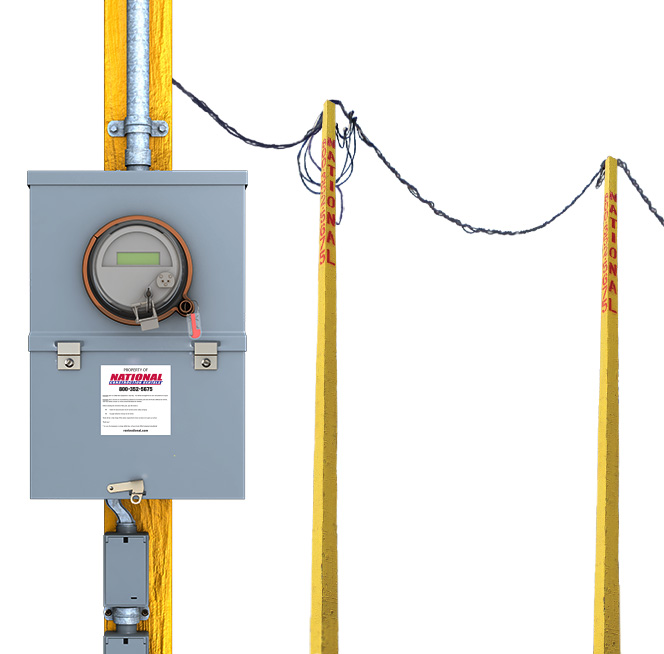
- The pole itself (wood or steel)
- Labor for installation (licensed electricians, bucket truck, auger, etc.)
- Meter base, wiring, panel, breakers, outlets
- Delivery
Pole materials alone can run $200-$800, and labor typically takes 4-8 hours, depending on complexity.
Larger amperage needs or multiple poles increase material and labor costs quickly.
Monthly Temporary Power Pole Rental Cost
Typical range: $95-$200 per month
This depends on:
- Amperage (50A vs 100A vs 200A+)
- Number of outlets and GFCIs
- Add‑ons like site lighting or weather protection
For a standard construction timeline of 2-6 months, most crews spend: $285-$720 in rental fees alone.
Some providers offer discounts for quarterly pre‑payment or longer‑term rentals.
Permit & Inspection Fees
Cities don’t take risks with live electricity, so temporary power requires approval.
Typical fees:
- Electrical permit: $50-$350
- Building permit: $100-$500+ (if needed)
- Inspections: $100-$500 per visit
- Application/admin fees: $25-$150
Underground connections or public right‑of‑way work can trigger additional fees.
Utility Company Fees
Utilities (LADWP or SCE) may charge for:
- Meter installation
- Connecting and energizing service
- Planner/site visit
A utility hookup can be $500-$2,500, especially if a transformer adjustment is required.
Good installers take care of all coordination so you’re not stuck on the phone with every agency in California.
Overhead vs Underground Temporary Power: Cost Comparison
Most job sites choose overhead, because it’s faster and cheaper.
| Installation Type | Base Install Cost | Extra Costs | When It’s Used |
|---|---|---|---|
| Overhead | ~$1,000 | Minimal | Standard construction sites |
| Underground | $170-$1,450 (existing service) to $1,450+ (street power) | Trenching, conduit, restoration | High-end builds or safety-sensitive sites |
Underground electrical is usually more expensive due to trenching, conduit, and restoration.
Material pricing per linear foot:
- Overhead wiring: $1.20+/ft
- Underground wiring: $1.50-$3+/ft
The farther your site is from utility access, the more this matters.
Cost Factors That Influence Final Pricing
Every jobsite is unique. These factors shift your bid up or down:
- Power Needs. Higher amperage costs more. Some large sites need multiple poles.
- Project Duration. Longer projects accumulate more monthly rental fees.
- Site Distance. If the nearest transformer is far away: More wire = more cost.
- Underground vs Overhead. Underground = higher labor + material.
- Labor Complexity. Emergency installations and difficult terrain increase time.
- Add‑Ons. More outlets, jobsite lighting, or power to a trailer add to costs.
- Permit Requirements. Every municipality has different rules.
Hidden Costs to Watch Out For
People rarely like surprises in their construction budget. Here are the big ones:
- Trenching in rocky or landscaped areas
- Damage to temp wiring from heavy equipment
- Extra inspection visits due to corrections
- Overloading circuits leading to upgrades
- Schedule delays that extend rental duration
Tip: Plan electrical load ahead of time. Rework is never cheap.
How Long Can a Temporary Power Pole Stay Installed?
The short answer: as long as the project needs power.
Typical terms:
- Standard rental: 12 weeks
- Permit validity: Up to 12 months before renewal is required
- Extensions beyond a year can require a new permit + re‑inspection
If timelines slip, monthly rental charges continue. Plan for buffer time.
How Long Does Temporary Power Installation Take?
Approval and activation usually take 3-6 weeks from application to energizing.
What affects timeline:
- Permit processing
- Inspector scheduling
- Utility workload
- Site readiness
Quick rule: Start utility coordination as early as possible. Waiting until framing begins is a recipe for power‑less workers.
Budget Scenarios
Here’s how numbers might look depending on your project:
Small Residential Remodel
- 50A overhead setup
- 2‑month rental
Total: $1,700-$2,400
Medium Commercial Build
- 100A-200A overhead setup
- 4‑month rental
Total: $2,200-$3,500
Large Multi‑Building Project
- Multiple poles, 200-400A
- Underground in some areas
Total: $3,500-$6,000+
How to Save Money on Temporary Power Pole Installation
A few smart plays:
- Choose overhead whenever possible
- Confirm amperage needs early
- Prevent damage by keeping heavy equipment clear of wiring
- Bundle services with one provider instead of juggling contracts
- Schedule ahead to avoid emergency rush fees
Your wallet will thank you.
Need Power Installed Right The First Time?
30+ years of on-time, inspection-ready setups.
Frequently Asked Questions
Do I need a separate temporary power pole for a construction trailer?
Often yes, especially if the trailer needs dedicated circuits for HVAC, lighting, or office equipment. Some setups allow branching from the main pole, but you’ll need proper load calculation and outlet placement to stay code-compliant.
Can I move a temporary power pole once it’s installed?
It’s possible, but it usually requires a licensed electrician and a new inspection. Relocation adds labor costs and may delay power availability if permits must be updated.
Are there cost differences between wood and metal temporary poles?
Wood poles are standard and most cost-effective. Steel or fiberglass poles cost more but may be required on sites with specific safety rules or where long rental durations demand higher durability.
Does weather impact temporary power pole cost?
Not directly, but storms or high winds can slow down installation schedules, trigger emergency service fees, or require additional grounding and protection, which may increase overall cost.
Conclusion
Temporary electrical service might not be the flashiest line item on a project plan, but getting it right keeps crews productive and timelines steady.
To manage temporary power pole cost effectively, you need to understand what drives pricing from amperage and setup type to permitting and the distance from the nearest utility source.
Planning early, sizing power correctly, and coordinating utilities ahead of installation can prevent delays, pricey rework, and extra rental months you didn’t budget for. Safe, compliant setup isn’t optional either, since inspections and activation hinge on proper installation.
If you’re planning a project and want reliable service, faster scheduling, and no surprise costs along the way, reach out for a free quote. We’ll help power your build from day one.