






Event Planning Mistakes To Avoid (2026)
Event Planning Mistakes To Avoid (2026)
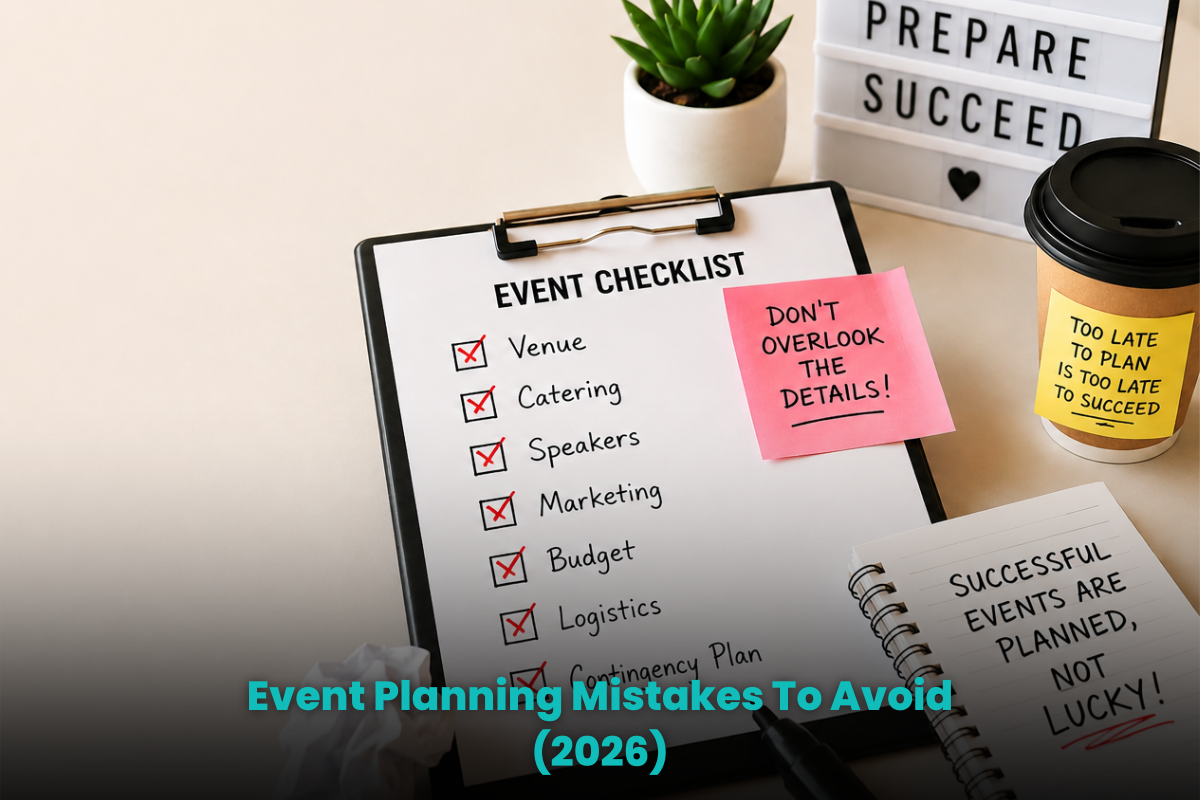
Some events are won or lost before the venue is booked. Others unravel on day one because of a restroom ratio nobody checked or a vendor agreement nobody read closely enough.
The failure points are rarely random.
They cluster in predictable places across every phase of the planning cycle. We’ll map all of them.
Key Notes
- Most event planning mistakes are made before a single dollar is committed.
- Restroom ratios, placement, and servicing are the most visible day-of failures.
- Vendor timing and contract clarity prevent the majority of logistics disasters.
- Post-event debriefs without owned actions guarantee the same mistakes repeat.
Pre-Event Planning Mistakes (Strategy & Forecasting)
The earliest decisions cause the most expensive downstream problems.
Get these wrong and you'll spend the rest of the planning cycle compensating for constraints you didn't need to have.
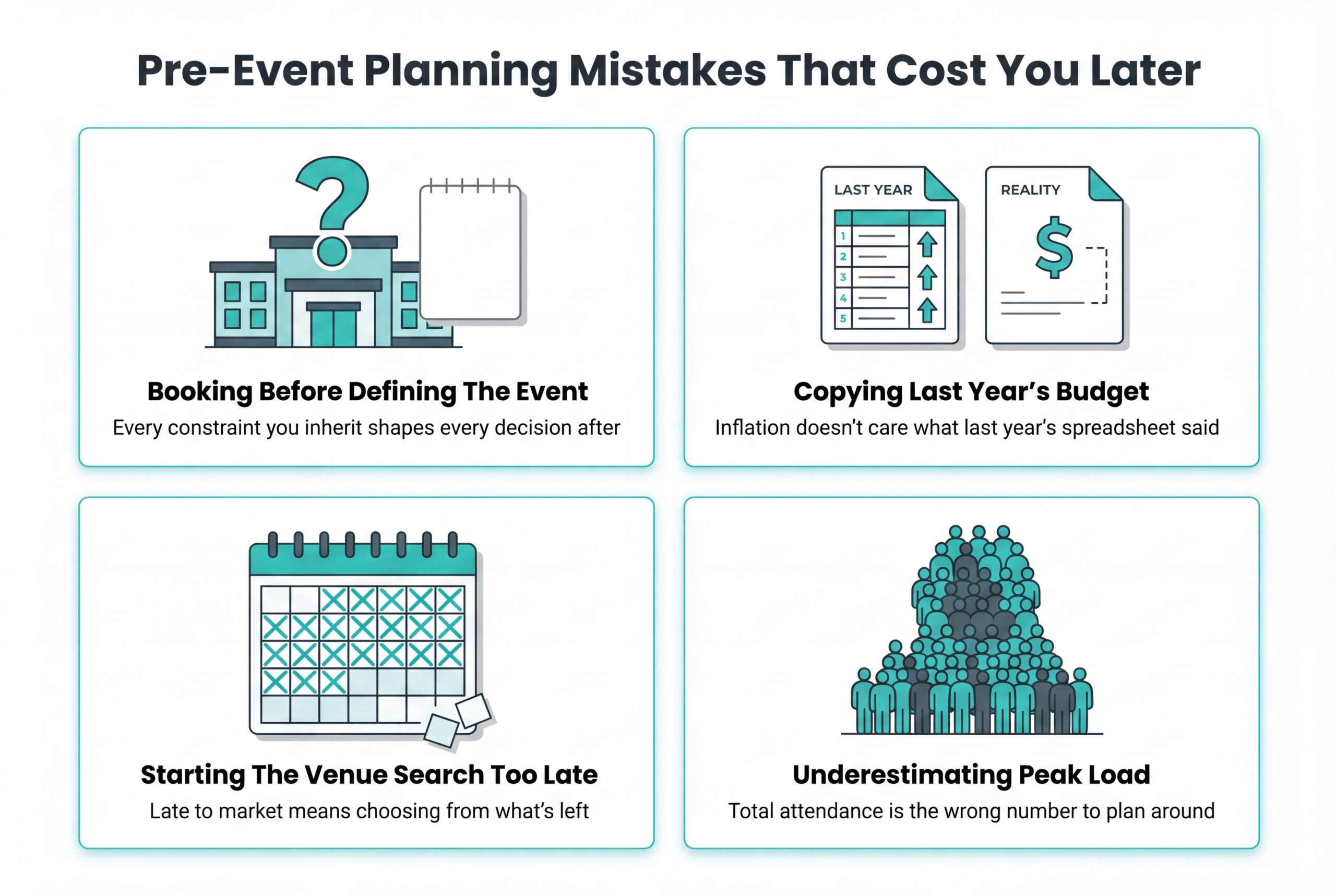
Booking Before You've Defined The Event
This is the single most damaging event planning mistake (and it's incredibly common). A venue gets locked, a date gets set, then the actual event gets designed around it.
Commit to a space before clarifying your objectives and you inherit hard constraints that may not suit your event — capacity limits, room configurations, noise curfews, and load-in windows.
The Downstream Effects:
- Wrong capacity for the audience
- Bad sightlines and AV compromises
- Contracts that are expensive to change
Define These Before You Book Anything:
- Event objectives and success metrics
- Estimated attendance range
- Program format and space requirements
- Technical, access, and logistical needs
Copying Last Year's Budget Without Adjusting
Historical budgets are a reference point, not a template.
- AV costs up
- Staffing rates up
- Equipment rental prices up
Baked-in underbudgeting doesn't reveal itself until change orders start arriving.
Starting The Venue Search Too Late
Going to market late means choosing from whatever's left instead of what's right.
For any event of real scale, venue search should start 9–18 months out.
- Compressed production timelines
- Lost negotiating leverage
- Forced compromises on infrastructure
Underestimating Attendance & Peak Load
Total attendance is the wrong number to plan around.
The number that matters is peak concurrent load.
- Arrival surges
- Main attraction clustering
- Exit bottlenecks
- Restroom and food congestion
Budget Mistakes That Blindside Planners
Underfunding rarely looks like a problem in the spreadsheet. It shows up as chaos on event day.
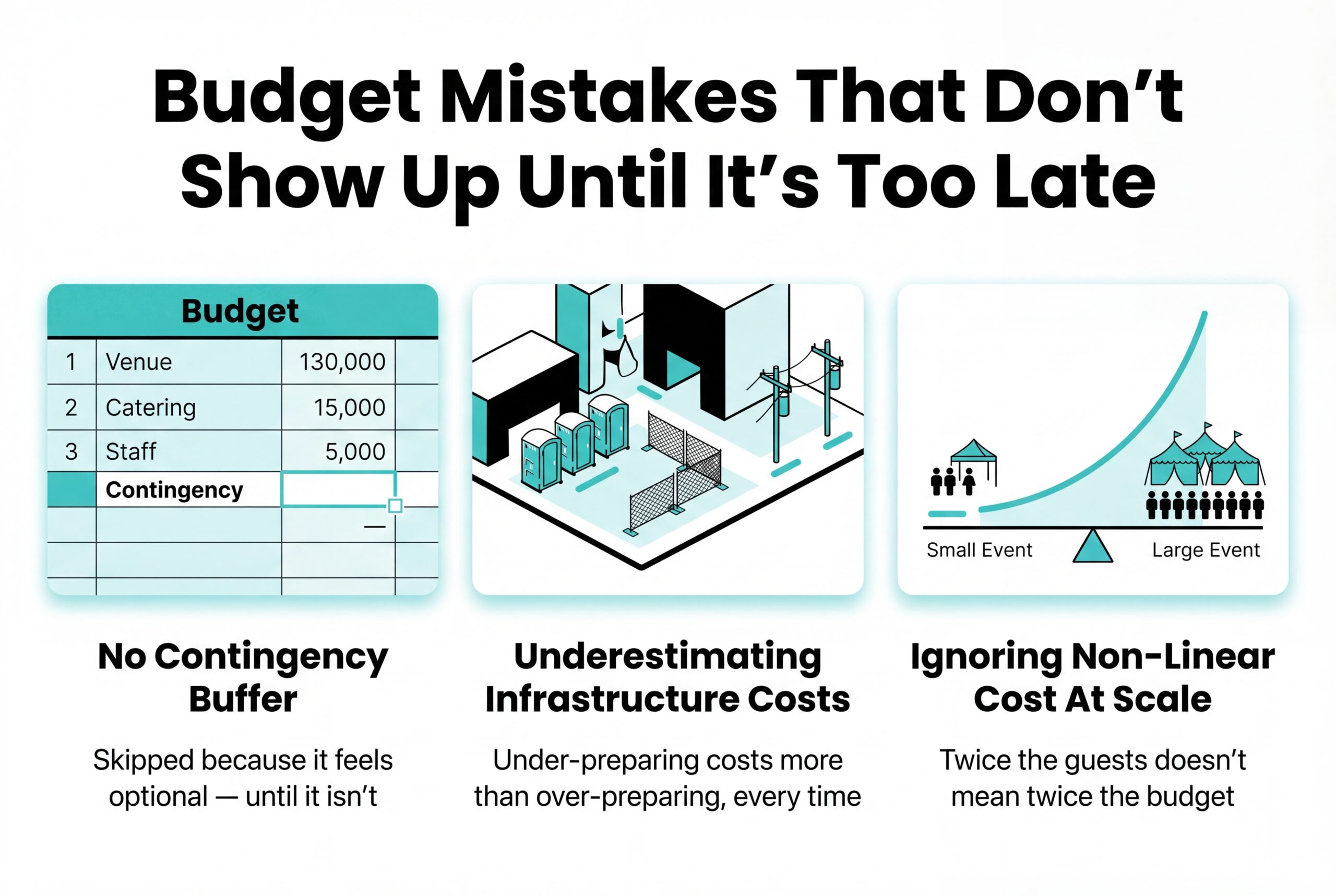
No Contingency Buffer
Industry standard is 10–20% contingency on total budget.
- Permit delays
- Equipment upgrades
- Extended rentals
- Vendor surcharges
Underestimating Infrastructure Costs
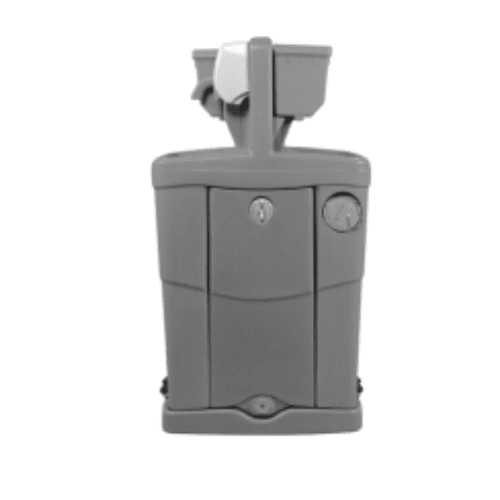
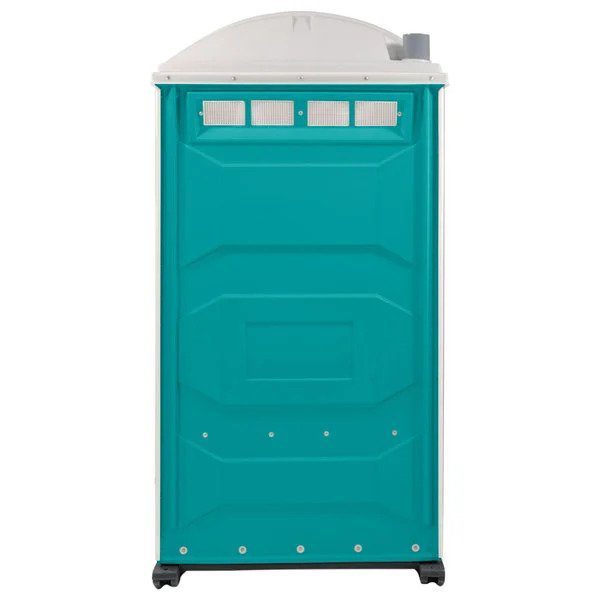
- Too few restroom units
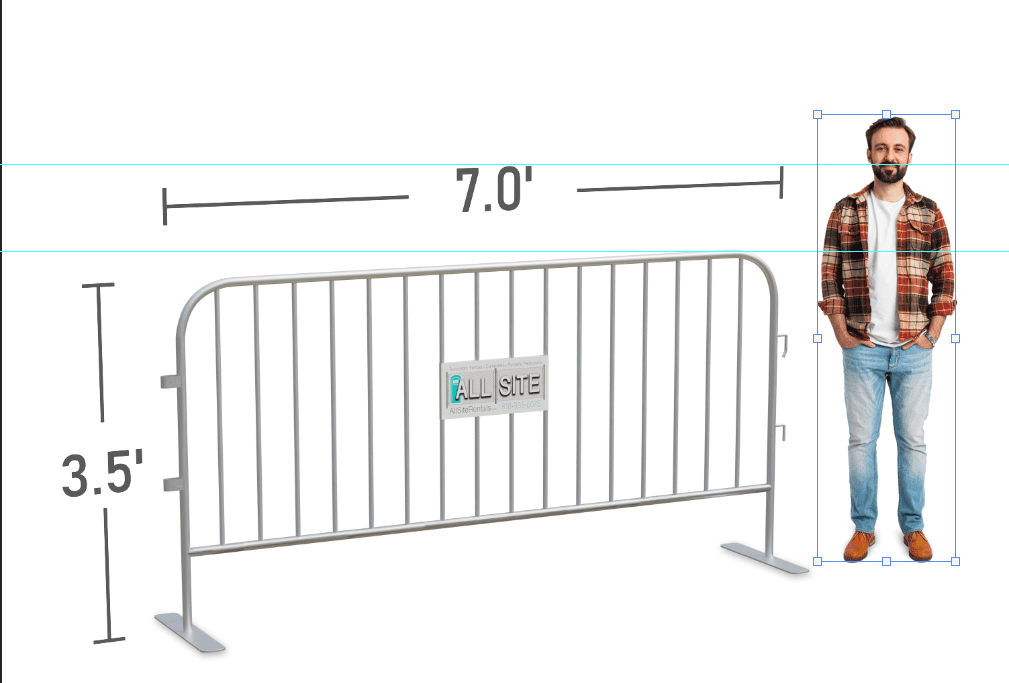
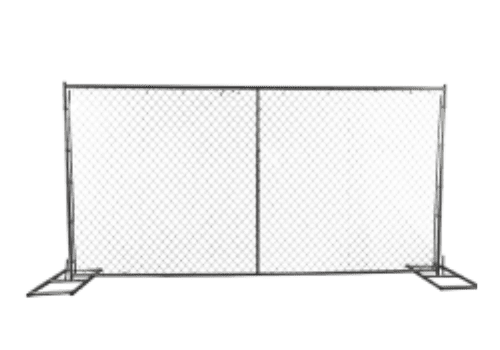
- Inadequate fencing
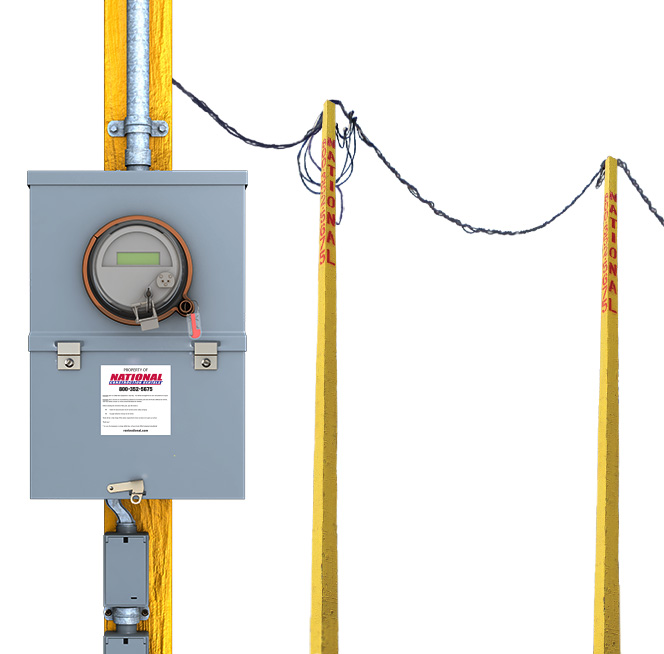
- No backup power
Ignoring Non-Linear Cost Increases
- Crowd safety infrastructure
- Additional staffing
- Operational upgrades
Restroom & Sanitation Planning Mistakes
Nothing tanks attendee satisfaction faster than long lines and dirty facilities.
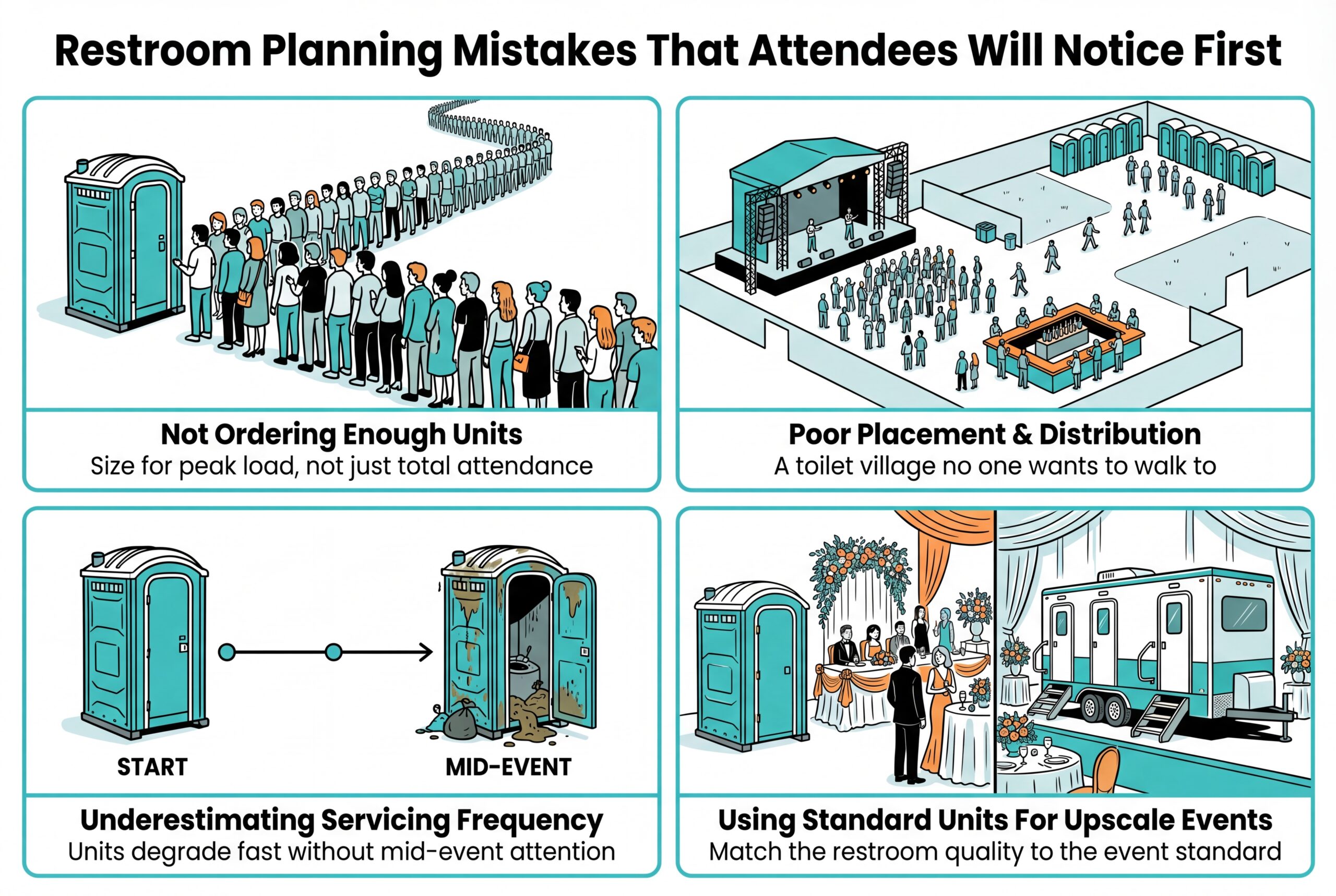
Not Ordering Enough Units
This is the most visible sanitation failure.
| Variable | Adjustment |
| Base ratio | 1 unit per 50 guests |
| Alcohol served | Add 15–20% |
| Longer events | Add additional units |
Poor Placement & Distribution
- Distribute units across high-traffic zones
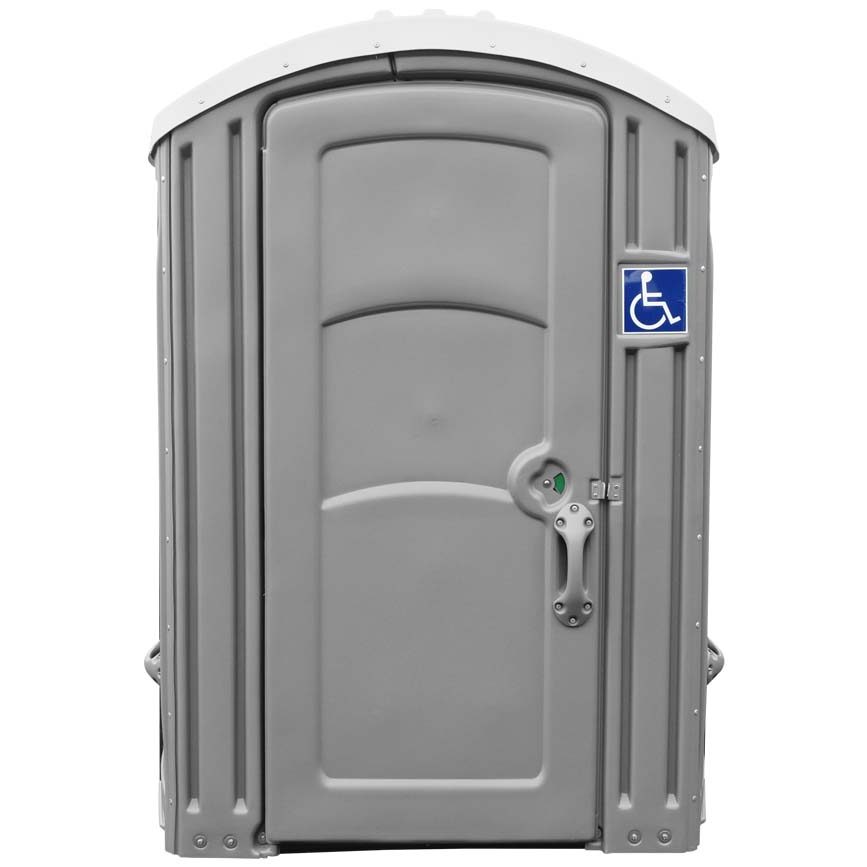
- Include ADA units
- Use level, well-lit areas
Underestimating Servicing Frequency
- Mid-event pump-outs
- Daily festival servicing
- Emergency support availability
Using Standard Units When Upgraded Options Are Needed
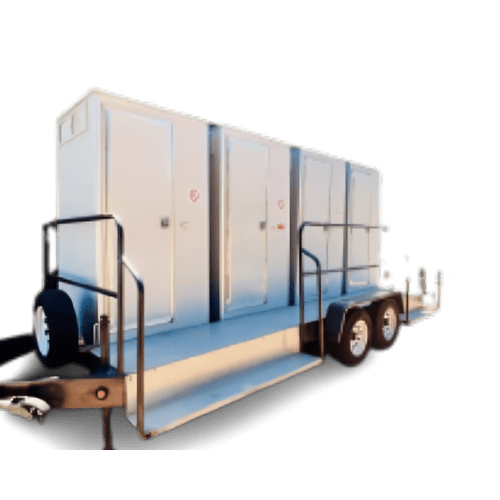
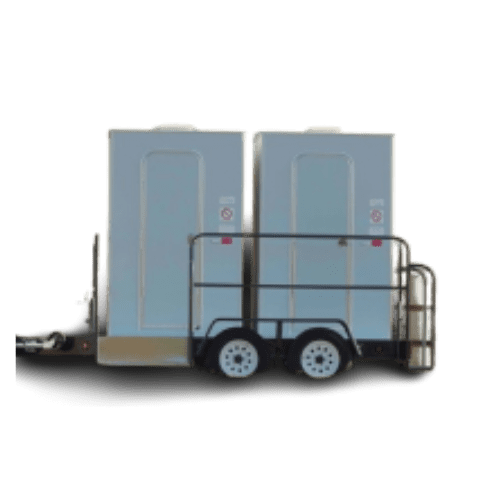
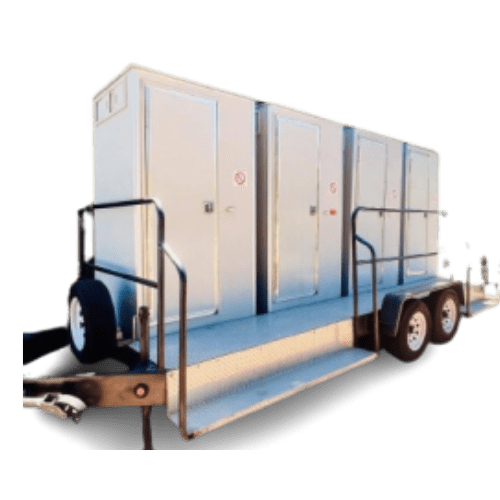
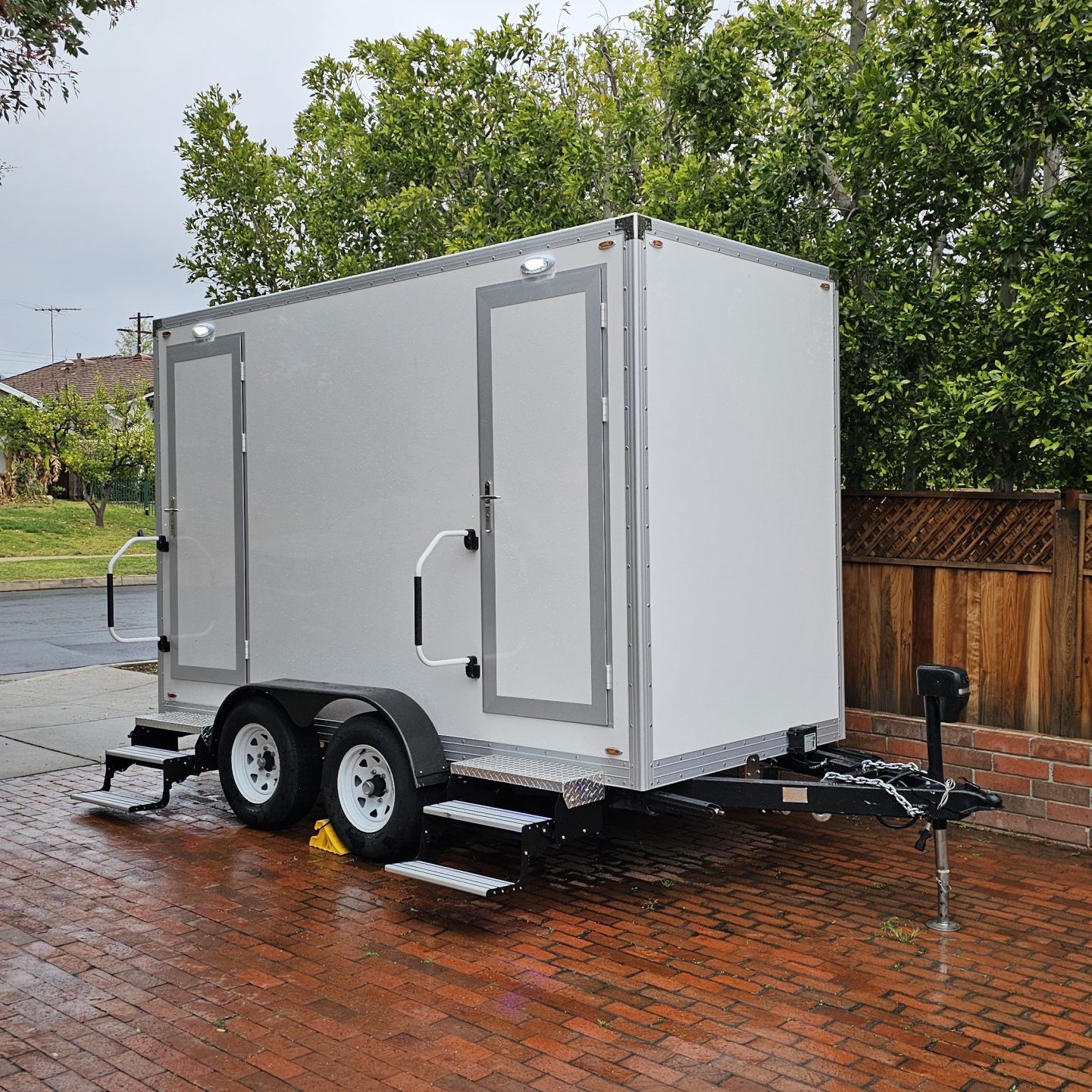
Luxury restroom trailers are often necessary for weddings, VIP sections, and corporate events.
- Climate control
- Interior lighting
- Finished interiors
What's The Right Setup For Your Event Size?
We’ll recommend the right units, quantities & placement.
Vendor & Logistics Mistakes
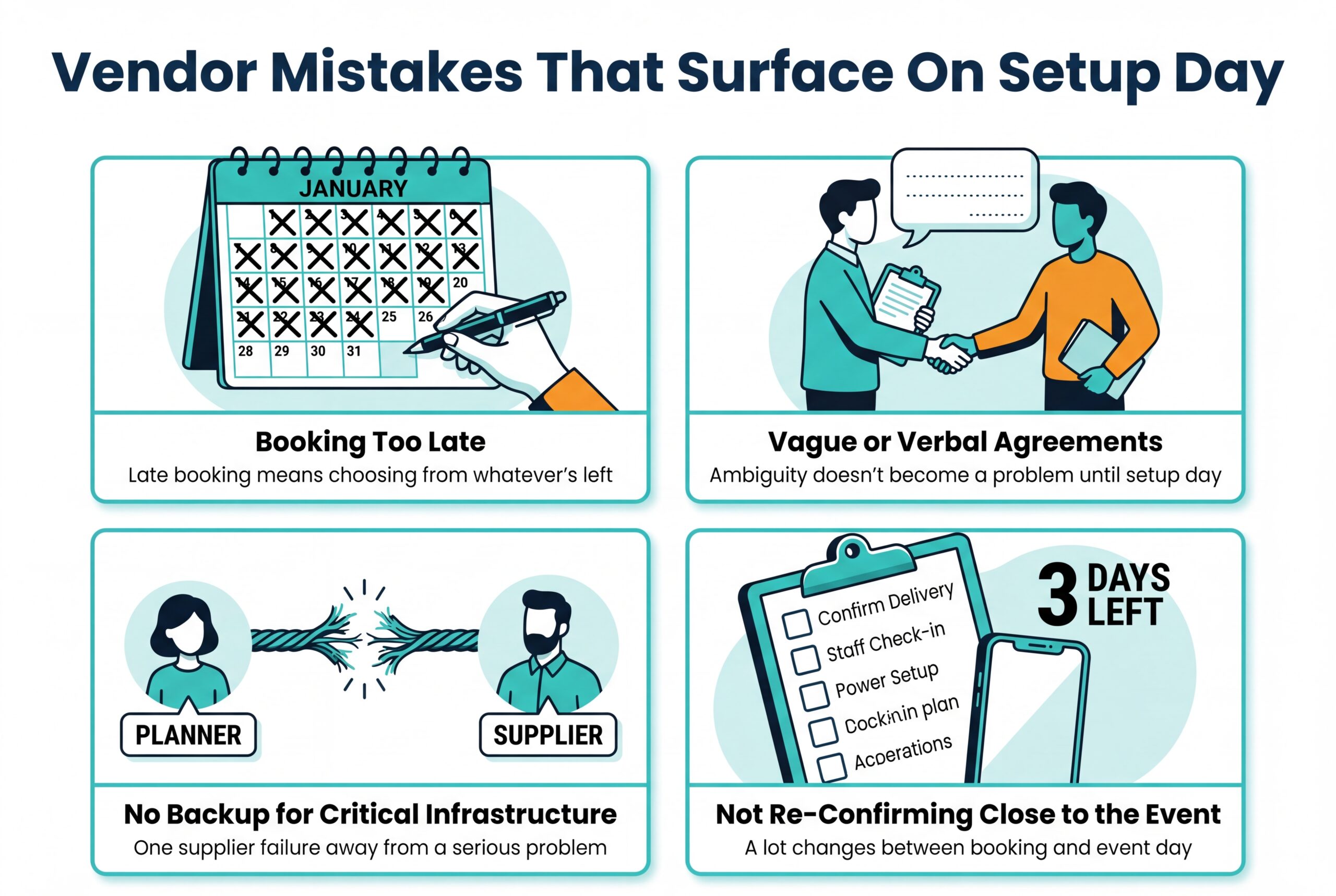
Booking Too Late
- Limited options
- Compressed timelines
- Less negotiating leverage
Vague or Verbal Agreements
- Delivery windows
- Equipment specs
- Cancellation terms
No Backup for Critical Infrastructure
- Restrooms
- Power
- Fencing
- Medical equipment
On-Site & Day-Of Execution Mistakes
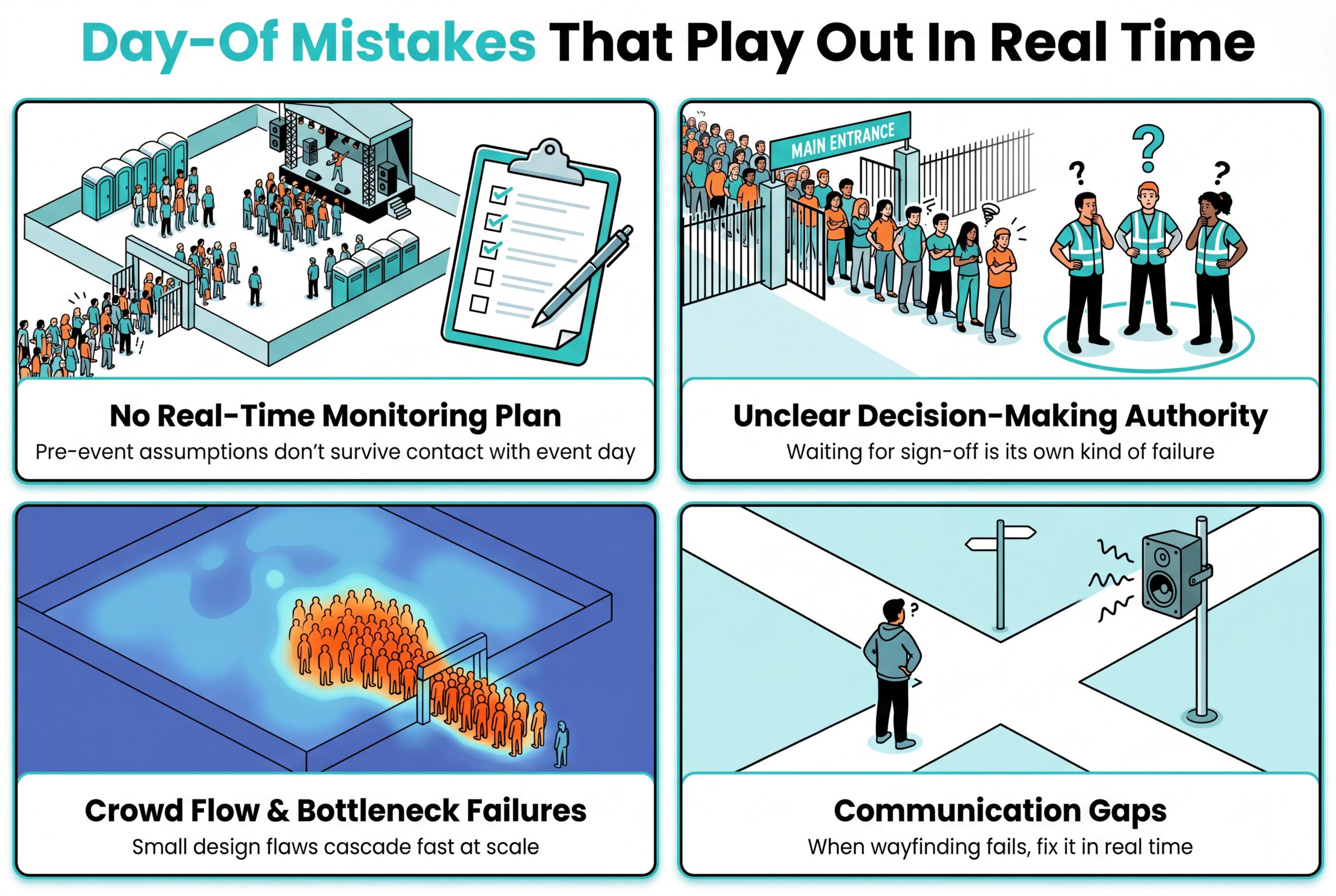
No Real-Time Monitoring Plan
- Queue wait times
- Restroom congestion
- Crowd density
Communication Gaps
- Confusing signage
- Weak PA coverage
- Uninformed staff
Post-Event Mistakes
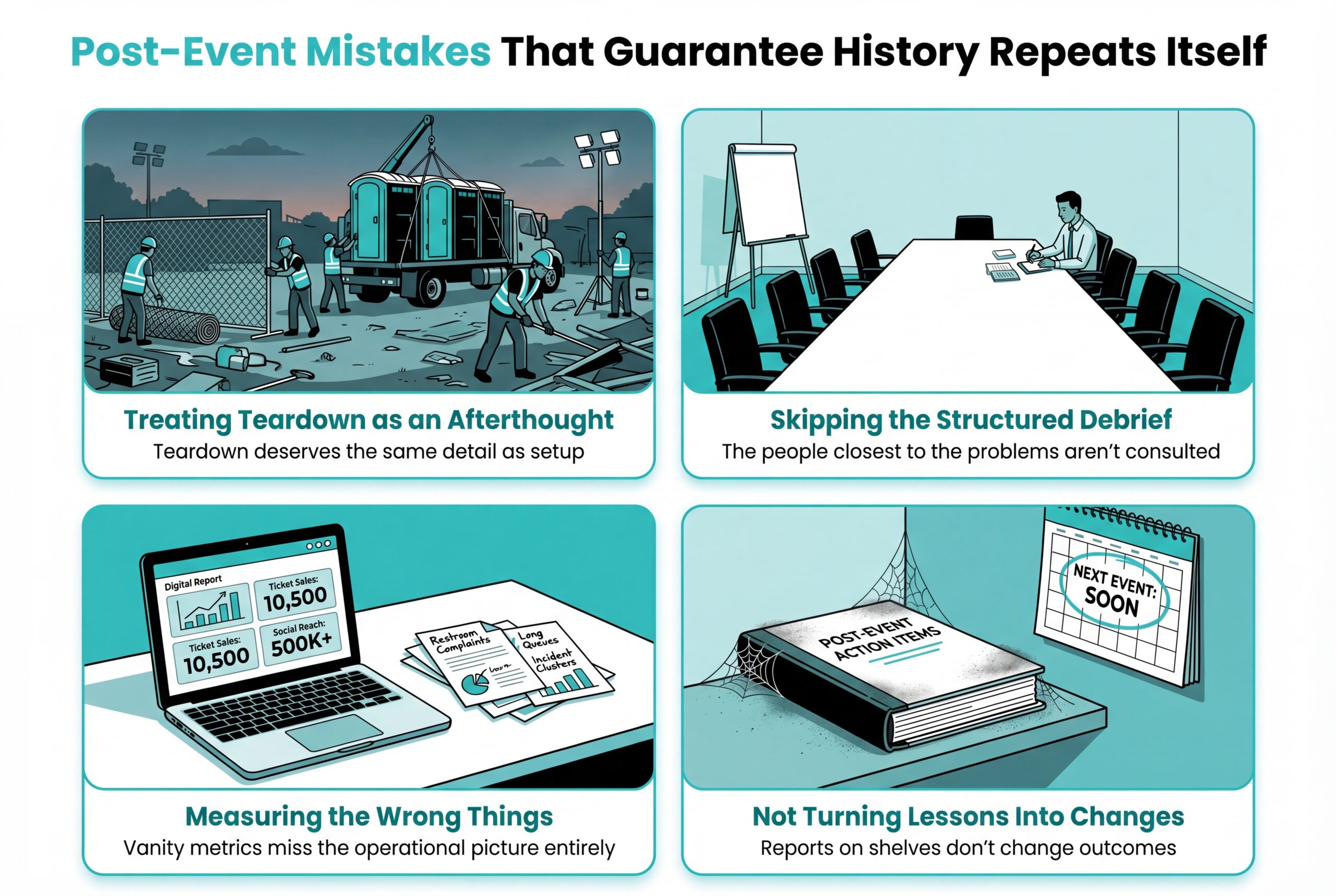
Treating Teardown as an Afterthought
- Understaffed crews
- Infrastructure removed too early
- No restoration plan
Skipping The Structured Debrief
- Security feedback
- Vendor feedback
- Operations review
Want The Infrastructure Side Handled Properly?
We've done this 100,000+ times — we know what works.
Frequently Asked Questions
How far in advance should you start planning an event?
For large-scale events, planning should start 12–18 months out — venue search and anchor vendor bookings first, everything else built around that. Smaller events (under 500 guests) can typically work within a 3–6 month window, but key infrastructure vendors should still be locked in as early as possible.
How do you avoid common event planning mistakes on a tight budget?
Avoiding common event planning mistakes on a limited budget comes down to sequencing spend correctly — protect contingency, infrastructure, and vendor contracts first, and cut from aesthetics and upgrades last. The costliest mistakes (under-specced restrooms, late venue bookings, vague vendor agreements) aren't expensive to prevent, but they are expensive to fix after the fact.
What is the biggest mistake event planners make?
The biggest mistake in event planning is locking in a venue or date before defining the event's objectives, audience, and operational requirements. Every hard constraint you inherit from a venue — capacity, layout, load-in windows — shapes every decision that follows. Get the sequence wrong and you spend the rest of the planning cycle working around it.
Where can I rent portable restrooms and temporary fencing for an event in California?
All Site Rentals provides portable restrooms, luxury restroom trailers, temporary fencing, crowd control barricades, and temporary power across the greater Los Angeles area and California. With 30+ years of experience and 97% customer satisfaction, they're a trusted option for events of all sizes — from private gatherings to large-scale festivals.
Conclusion
Most event planning failures start long before guests arrive.
Define before you book, budget honestly, plan infrastructure properly, and build operational flexibility into every phase.
The infrastructure side of your event is one of the easier things to get right with the right partner. We’ve handled site setups across California for 30+ years.