







Festival Waste Management Guide (Los Angeles 2026)
Festival Waste Management Guide (Los Angeles 2026)
LA festival waste management in 2026 means navigating AB 2176, SB 1383, county health permits, franchised hauler requirements, and organics separation mandates — all before a single porta potty gets delivered.
The regulatory stack is real. The permit timelines are tight. And the gap between a working system and a compliance headache comes down to how early and how seriously you planned.
We’ll cover everything: forecasting, plan structure, sanitation, diversion, vendor policy, staffing, and closeout.
Key Notes
- LA festivals averaging 2,000+ attendees per day must file a formal waste reduction plan.
- Budget $3–$8 per attendee for a well-managed three-stream waste system.
- Sanitation planning starts at 1 unit per 50 attendees, then adjusts for alcohol, heat, and duration.
- Well-designed festivals with staffed sorting can realistically divert 70–80% of waste from landfill.
LA Regulations and Permit Requirements for Festival Waste Management
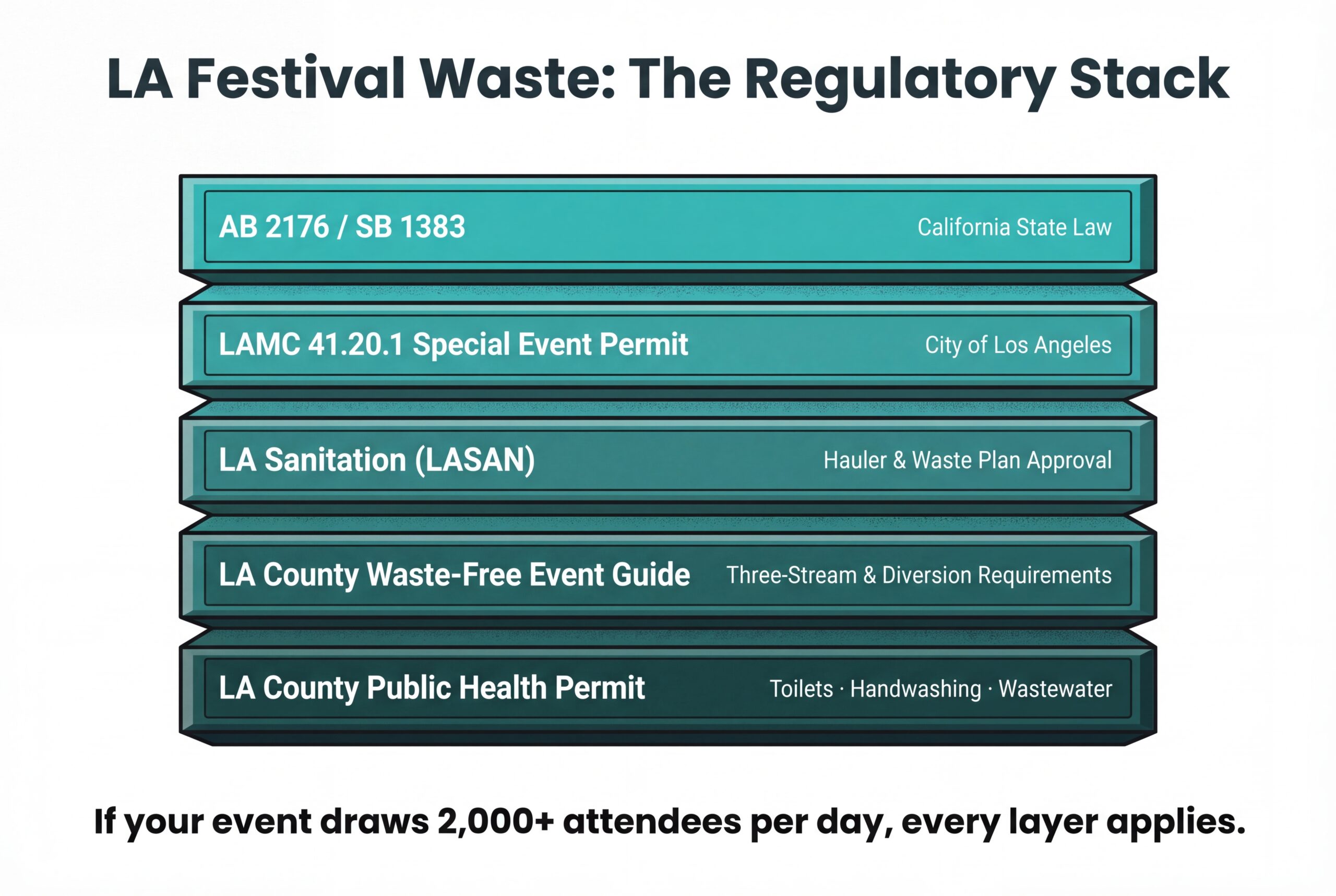
Festival waste management in Los Angeles sits under a stack of state laws and local requirements that apply simultaneously – and ignorance of any one of them creates real compliance risk.
State Law: The Baseline You Can't Avoid
California's AB 2176 (Public Resources Code 42648) is the first threshold to understand.
If your festival averages more than 2,000 attendees per day, you're legally required to:
- develop and implement a written solid waste reduction plan
- coordinate with licensed haulers and recyclers
- and report diversion efforts to your local jurisdiction or CalRecycle on request
SB 1383 (the state's Short-Lived Climate Pollutants law) goes further. It treats events like commercial generators, which means your festival must separate organics — food scraps and food-soiled paper — from recycling and landfill streams.
LA City & County Requirements
At the city level:
Any "Special Event" in LA requires a permit under LAMC 41.20.1.
The permitting process pulls in LAPD, Fire, Public Works, and LA Sanitation (LASAN), and your application must demonstrate adequate trash, recycling, and sanitation systems before it's approved.
For events in parks or on Rec & Parks land:
The department's large event proposal requirements specify minimum receptacle counts across event, parking, and pedestrian areas.
The organizer – not the venue – is responsible for providing, servicing, and removing them.
LA County's Waste-Free Event Guide adds further expectations for:
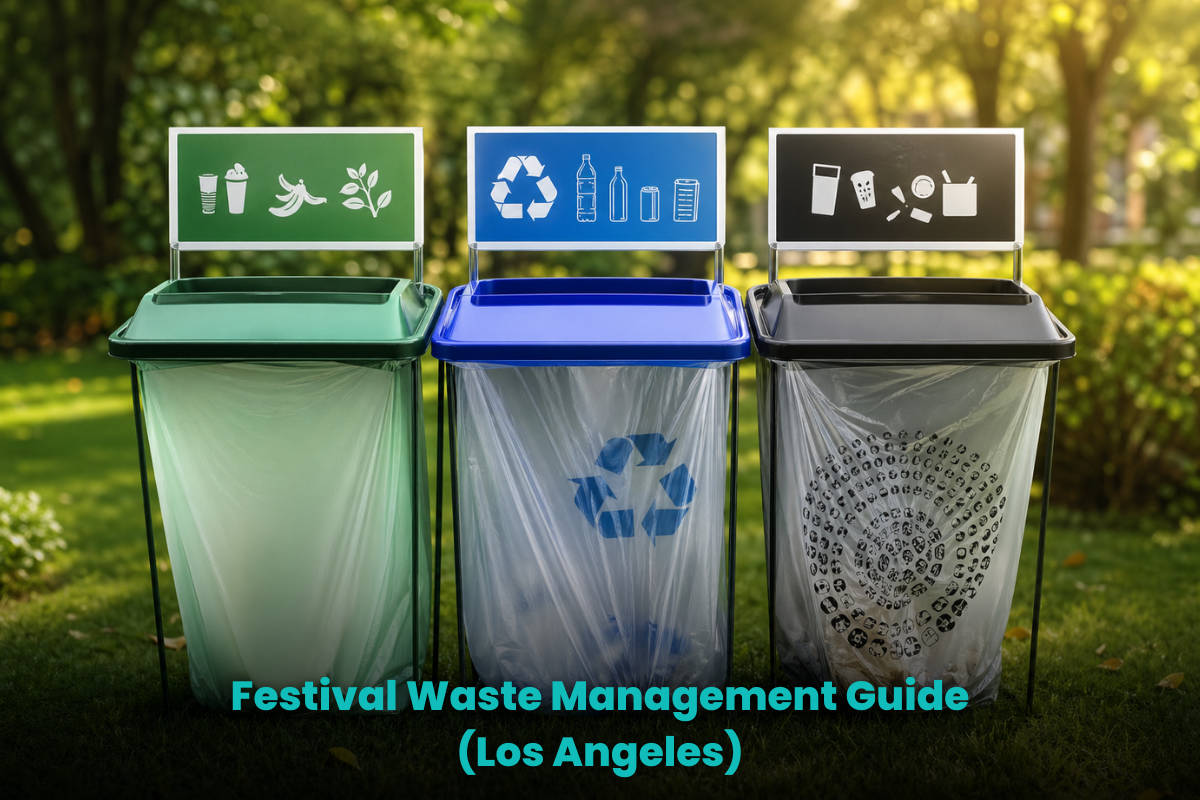
- three-stream collection: trash, recycling, organics
- clearly labeled bins
- vendor-level organics separation
- a written waste plan with hauler arrangements and diversion targets
For LA County sites, these aren't suggestions. They're permit conditions.
On sanitation:
The LA County Department of Public Health requires an Event Organizer Public Health Permit for community events.
This permit governs toilets, handwashing, wastewater, and trash for the entire site. Your portable restroom vendor must be licensed and able to document that waste is pumped to an approved wastewater treatment facility.
When To Start: Earlier Than You Think
| Timeline | Key Milestone |
| 12–18 months out | Define sustainability goals; identify applicable regulations; bake waste into site design and budget |
| 6–12 months out | Engage permitted haulers, portable toilet vendors, and food recovery partners; draft waste management plan |
| 4–5 months out | Submit special event permit application, including waste and sanitation plan |
| ~90 days out | All core permits, hauler contracts, and toilet counts must be finalized |
For LA County parks specifically, large events of 5,000+ people are advised to start the reservation and permit process 6–9 months in advance.
Waste Forecasting: How Much Will You Generate?
Before you can design the system, you need to know what you're dealing with.
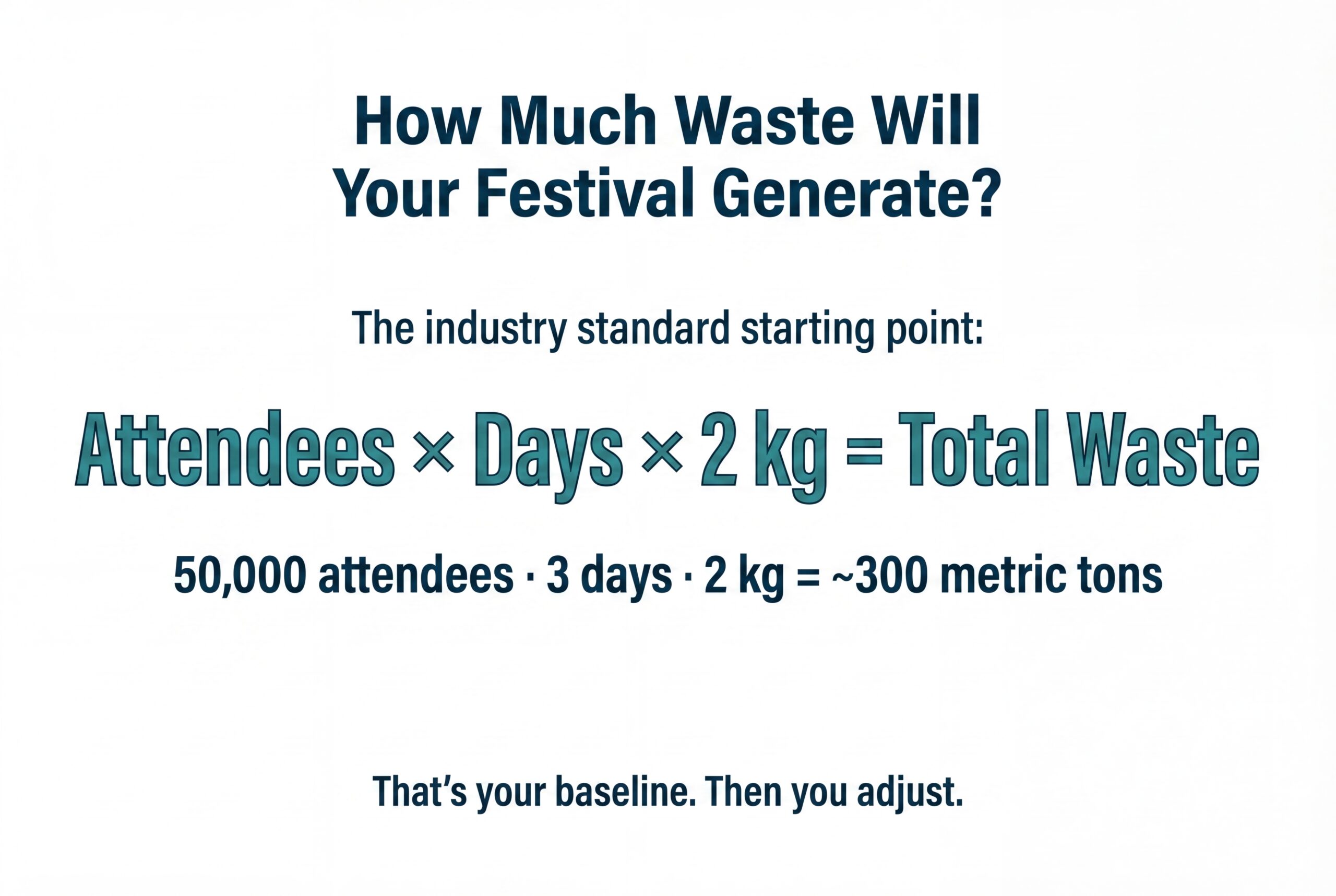
Festival waste management planning starts with a realistic volume estimate. And that means going beyond a flat "we'll book 10 dumpsters and see."
The Baseline Formula
Breaking Waste Into Streams
A practical first-pass split for planning purposes:
| Stream | Estimated Share |
| Landfill | 40–50% |
| Recycling | 30–40% |
| Organics/compost | 20–30% |
| Hazardous/special | <2% estimated separately |
Recycling volume is largely driven by drink sales – cups, cans, PET bottles, cardboard.
Organics come from food sales and back-of-house prep waste.
Hazardous waste — batteries, fuel, medical sharps, aerosols — is a small share by weight but high-risk, and must be forecast separately based on your operations, not per-capita benchmarks.
Variables That Shift The Forecast Significantly
- Camping: Multi-day camping festivals routinely exceed 2 kg/person/day – sometimes by a wide margin – due to abandoned tents, gear, and food waste. At some festivals, campsites generate more than half the total waste.
- Event culture: EDM, beer-heavy, or food festival formats generate more per capita than daytime family events.
- Weather: Heat drives more beverage containers; rain creates ponchos, damaged gear, and soggy waste that can't be sorted.
- Vendor packaging: This is the single most controllable input into your forecast. Compostable fiber vs. mixed plastic laminates changes your entire stream composition.
The biggest early-stage mistake is treating waste as a hauling line item – booking dumpsters based on a rough tonnage guess without designing the system around vendor materials, site layout, and organics handling.
That leads to under-capacity, contamination, and missed diversion goals even when the total volume estimate wasn't far off.
Building Your Festival Waste Management Plan
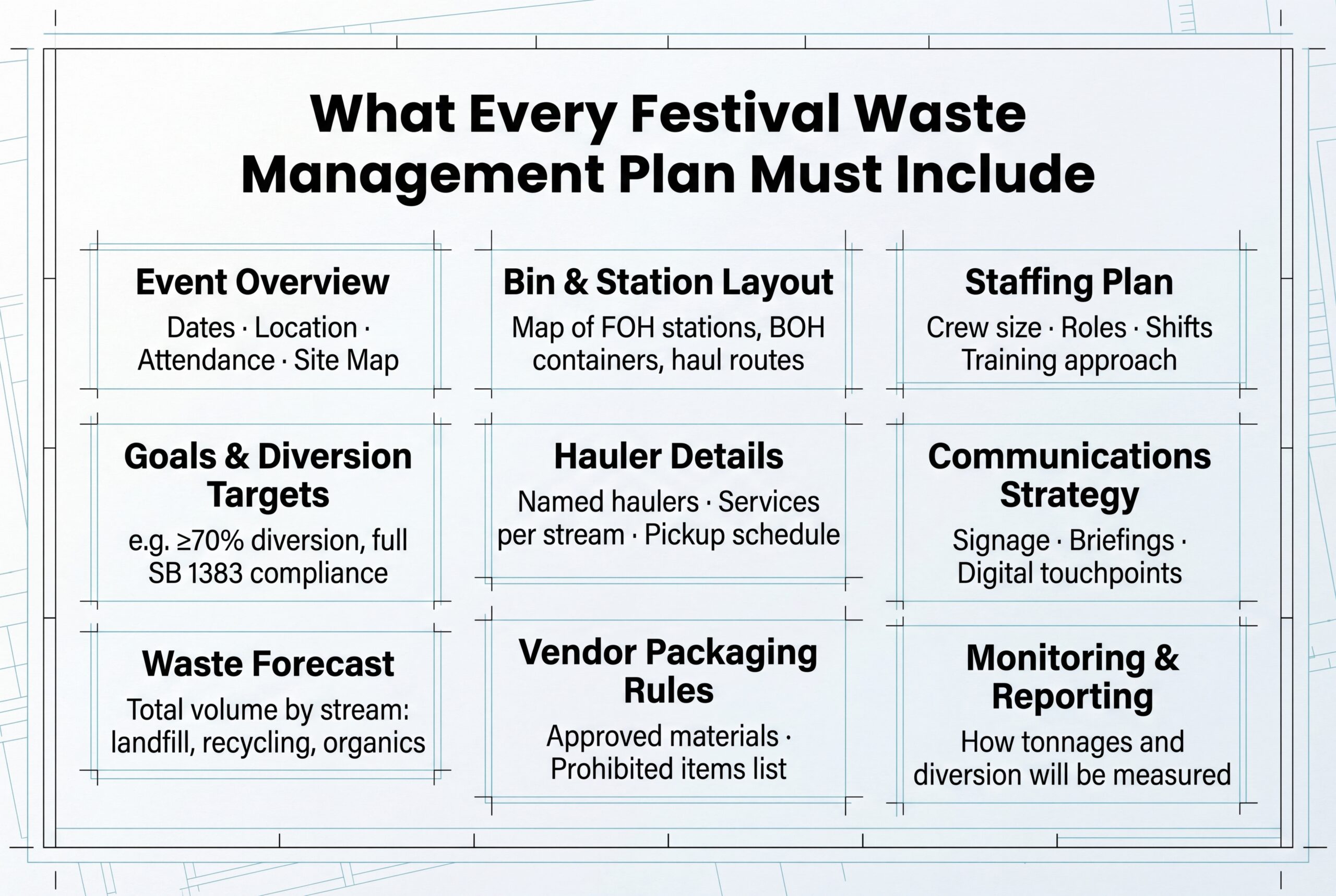
A festival waste management plan is the operational document that tells every person on your team what the system is, who owns what, and what happens when things go wrong.
LA permit agencies will ask for it, and your hauler needs to work from it.
What Separates Best-In-Class Plans From Average Ones?
Average plans stop at bin counts and hauler bookings.
Best-in-class plans treat waste as a design variable from day one – built into procurement, site layout, and vendor selection before the event takes shape.
In practice, that means:
- Stream-specific playbooks: Not just "bins everywhere" but a defined strategy for organics in the campsite, VIP catering waste, crew catering, and food recovery donation routes.
- Source reduction: Reusable cup schemes, deposit systems, and menu design that avoids packaging waste before it needs to be managed.
- Integrated procurement: Allowed materials are chosen at the vendor contracting stage, not retrofitted after load-in.
- Year-on-year improvement targets: Baseline diversion data from this year becomes the KPI for next year.
Roles & Responsibilities
| Role | Responsibility |
| Waste/Sustainability Manager | Owns the plan, vendor rules, hauler relationship, and reporting |
| Zone Leads | Manage waste operations by area: stages, food courts, campgrounds, VIP |
| Green Team Volunteers | Staff FOH stations, guide attendees, keep bins tidy |
| Collection/Porter Crew | Move full bags from stations to the waste yard |
| BOH Sorting Crew | Sort material in the waste yard before hauling |
Emergency Contingencies
Your plan should include a brief risk/response table covering:
- overfull containers or missed hauls: backup hauler contact, overflow locations, trigger thresholds
- high contamination: re-sort protocol, staff correction comms
- extreme weather: wind-proofing, mud/dust impacts, extra litter crew
- vendor non-compliance: escalation steps, who has authority to act
The Right Level Of Detail:
Specific on numbers, locations, and named contacts; high-level on execution micro-routing.
A strong large-festival plan is 10–20 pages plus annexes – written so operations teams can run from it, not a policy document that lives in a drawer.
Sanitation Planning: Porta Potties, Placement & Servicing
Sanitation is regulated separately from solid waste and has its own failure modes, which is why it deserves its own section in any serious event waste management plan.
How Many Units Do You Need?
Start with 1 unit per 50 attendees as a conservative baseline for peak concurrent attendance, not total ticket sales.
Then adjust:
| Factor | Adjustment |
| Alcohol served | +15–20% units |
| Event duration over 4 hours | Increase count and/or service frequency |
| Higher proportion of women | Bias additional units toward women's blocks |
| Heat/high hydration | Additional 10–20% buffer in high-traffic zones |
Add at least one ADA-compliant unit at every major cluster – legally required at a minimum 5% of single-user toilets for any public event.
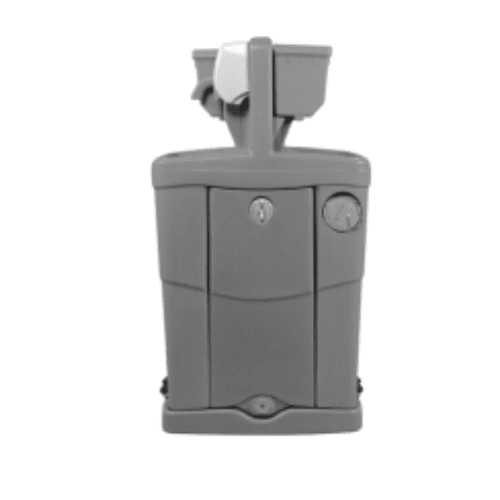
Plan approximately 1 handwashing station per 4 toilets, with additional stations near all food vendor areas.
Placement Rules
- Cluster within 300 feet of any occupied zone; no more than 150 feet from major food and bar areas, but far enough away to prevent odor drift.
- Never place on soft mud, steep slopes, upwind of crowds, or blocking fire lanes, exits, or emergency routes.
- Avoid dark, isolated spots – toilets need lighting and passive visibility, especially at night.
Not Sure How Many Units Your Festival Needs?
We'll size your setup based on your event – free.
Waste Streams & Diversion Strategy
Designing a multi-stream festival waste management system that achieves meaningful diversion requires more than good bin placement.
Realistic Diversion Benchmarks
| System Quality | Diversion Rate |
| Unmanaged / basic recycling only | 20–40% |
| Well-designed 3-stream with vendor rules | 50–80% |
| Staffed sorting + tight material control | 80–90%+ |
For an LA festival in 2026:
- 70%+ is ambitious but achievable with proper design
- 80%+ is a stretch goal that requires heavy volunteer or staff input
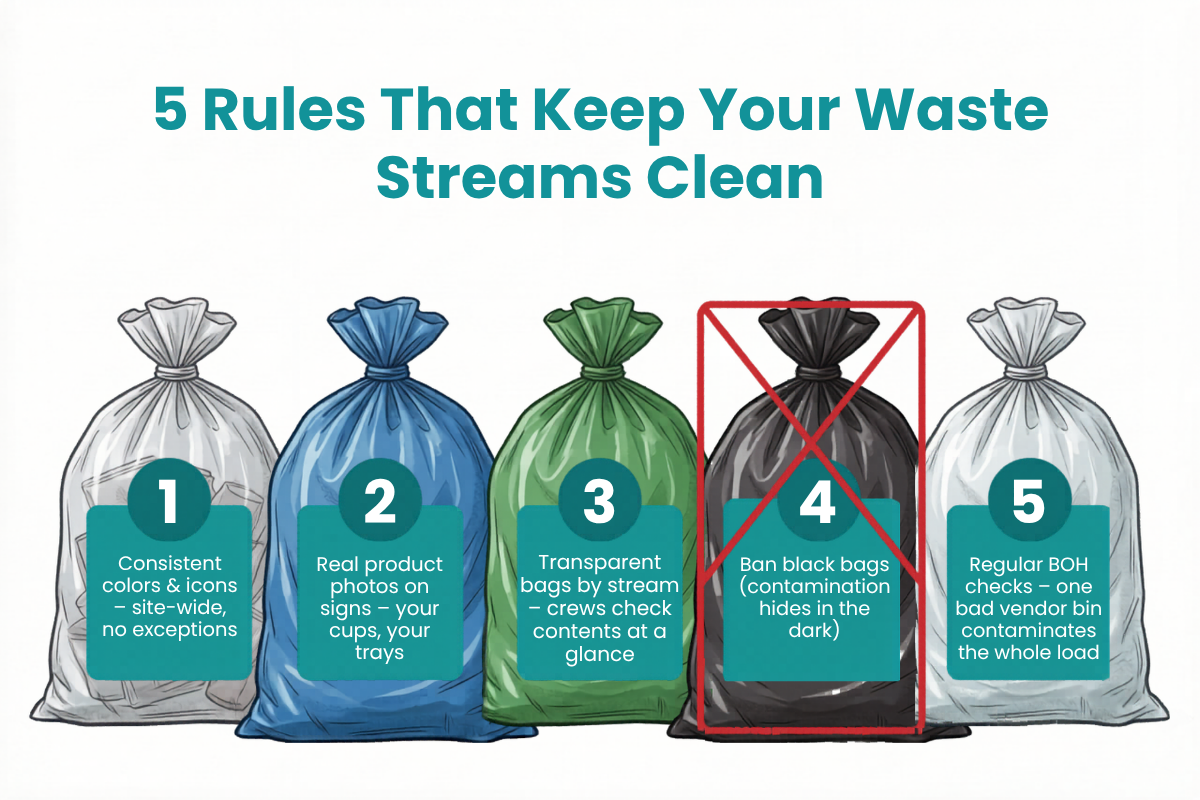
Preventing Contamination
Vendor and Food Packaging Policy
Vendors largely determine what ends up in your bins. Tight packaging rules, baked into contracts and actively enforced, are non-negotiable if diversion is a real goal.
What To Ban & What To Require
| Ban | Require |
| Polystyrene/Styrofoam | Fiber/paper trays |
| Black plastic | Aluminum cans |
| Foil-lined laminates | Unlined compostable paper |
| Plastic straws and foam clamshells | Deposit or reusable cups |
Enforcement That Works
- Pre-event: Vendor sustainability briefing with physical samples of approved materials. Share a visual packaging guide months before the event so vendors can source correctly.
- Load-in: Sustainability crew visits each booth to verify packaging and confirm BOH bin setup before the event opens.
- During the event: Periodic friendly checks; issues corrected on the spot and documented.
- Penalties: Tiered — verbal warning → written notice → partial sustainability deposit loss. Reserve the right in contract to restrict service or remove vendors for serious violations.
Getting Attendees To Sort Correctly
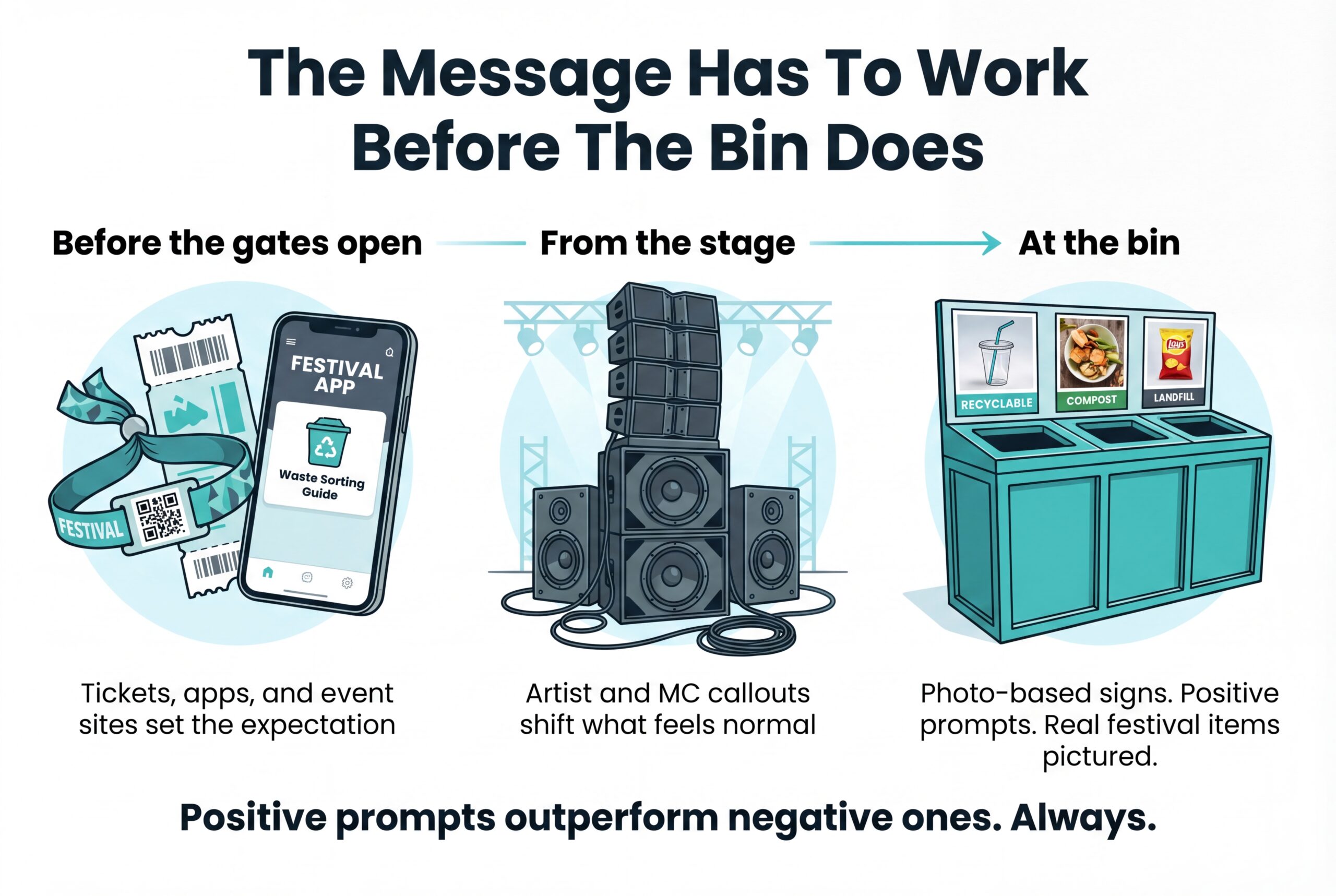
Most attendees will sort correctly if the system makes it easy.
Design For Default Success
- Place multi-stream stations exactly where people finish food and drinks: exits from food courts, bar perimeters, stage approaches.
- Never leave a lone trash bin as the easy option.
- Make landfill the last resort – smaller openings, less visual prominence, and language like "only if it can't be recycled or composted."
Signage & Communication That Works
Staffing & Operations
A functional festival waste management operation needs a clearly owned structure:
- Waste/Sustainability Manager who owns the plan end-to-end
- Zone Leads responsible for specific site areas
- Green Team at front-of-house stations
- Collection/Porter Crew moving bags to the waste yard
- BOH Sorting Crew managing the waste yard and pre-haul sorting
Practical Staffing Ratios
- FOH Green Team: Roughly 1–2 volunteers per major waste station, or ~1 per 500–1,000 attendees at peak
- Overall waste and cleaning: ~1 staff member per 150–200 attendees, including volunteers and contractors, for high-diversion events
Post-Event Cleanup, Reporting & Site Restoration
An effective closeout is pre-planned, resourced, and measured.
The Four-Phase Cleanup Structure
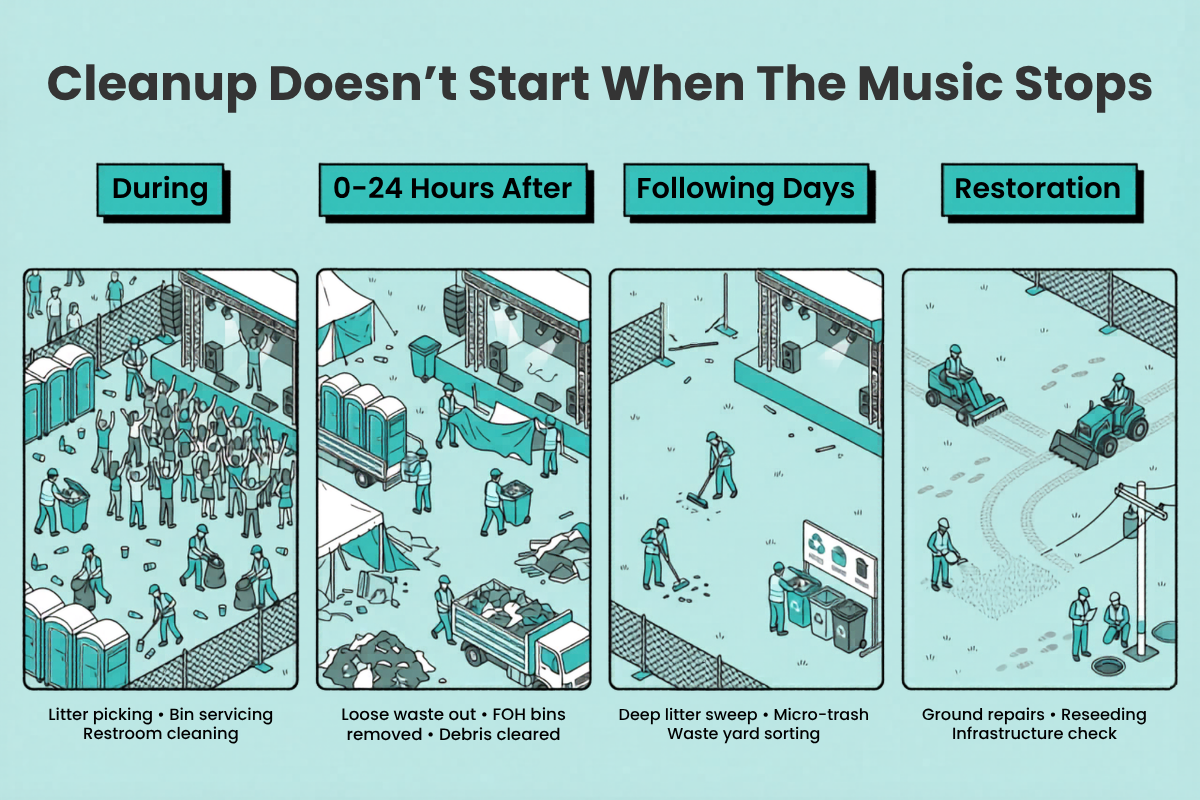
Work backward from your permit or venue contract deadline and schedule crews with margin – not to the wire.
Post-Event Reporting
Under AB 2176, LA jurisdictions can require a post-event diversion report – typically within ~30 days of the event.
It should include:
- event basics: name, location, dates, daily attendance
- tonnage by stream: landfill, recycling, organics, with hauler scale tickets attached
- a diversion calculation
- program summary describing your systems
Collect this data during the event. Don't try to reconstruct it afterward.
Still Figuring Out Your Festival Infrastructure Checklist?
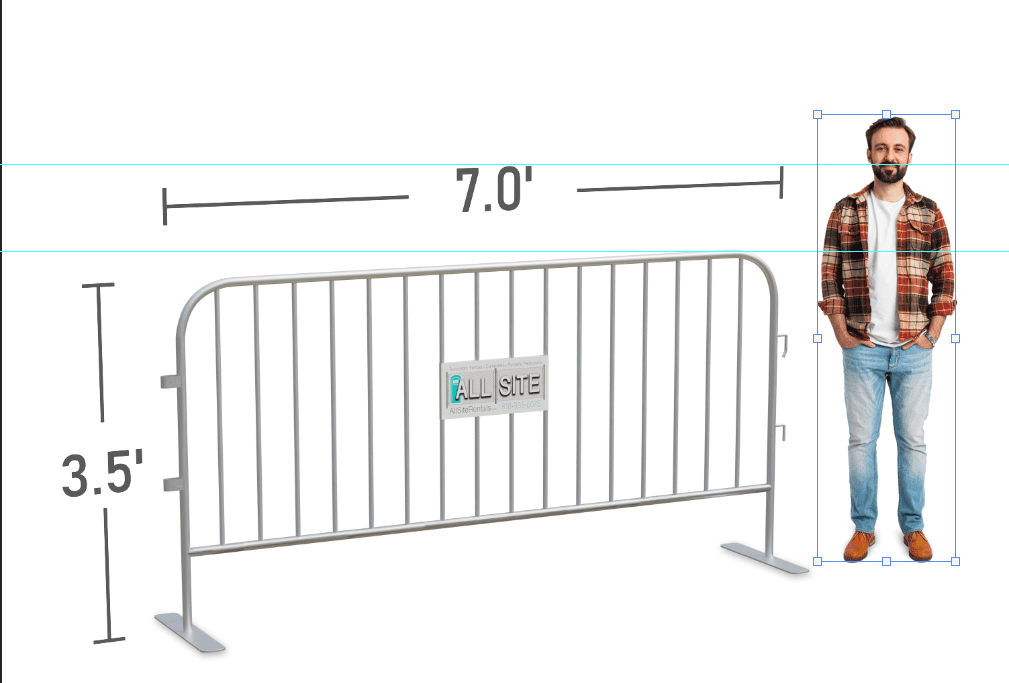
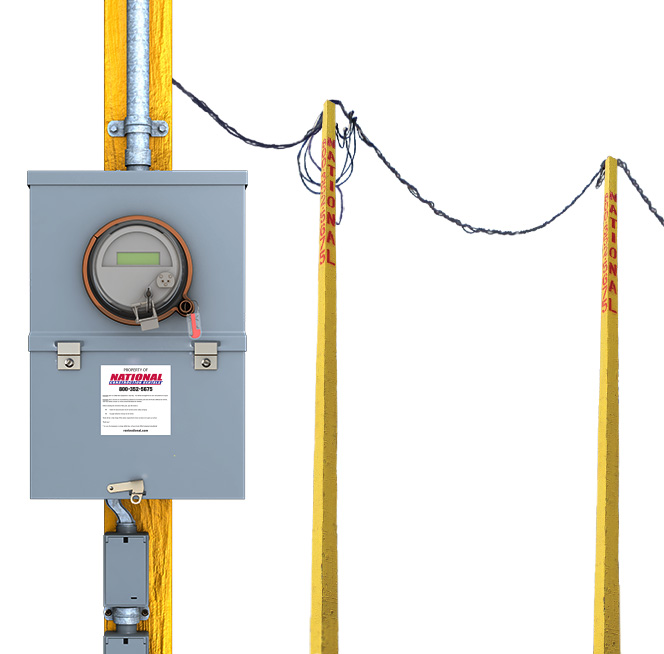
One call covers restrooms, fencing, power, and handwashing.
Frequently Asked Questions
How much does festival waste management cost per attendee?
Festival waste management typically costs between $3–$8 per attendee for a well-managed three-stream system, rising to $10–$15+ for high-diversion or zero-waste-targeted events. The biggest cost drivers are staffing, green team and sorting crew, hauling frequency, and whether you're managing organics separately.
What is the fine for non-compliance with SB 1383 at a California event?
SB 1383 violations in California can carry administrative penalties of up to $10,000 per day for jurisdictions, with enforcement cascading to event organizers through permit conditions and hauler compliance requirements. Beyond fines, non-compliance risks permit denial for future events and can trigger LA County Public Health intervention mid-event.
How many porta potties do I need for a festival of 10,000 people?
For a 10,000-person festival, a conservative baseline is 200 units – calculated at 1 unit per 50 attendees at peak concurrent attendance. That number should increase by 15–20% if alcohol is served, and further still for events running longer than four hours or in high heat.
Where can I rent porta potties and handwashing stations for a festival in Los Angeles?
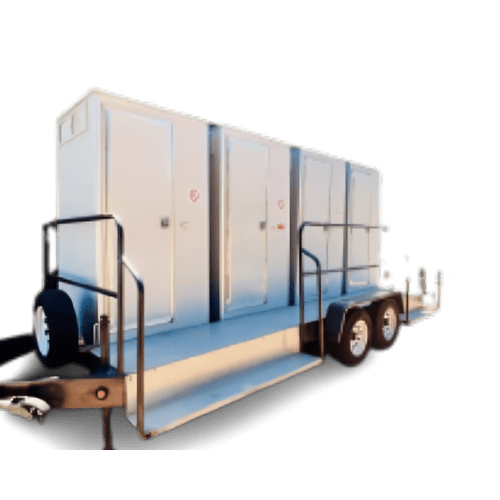
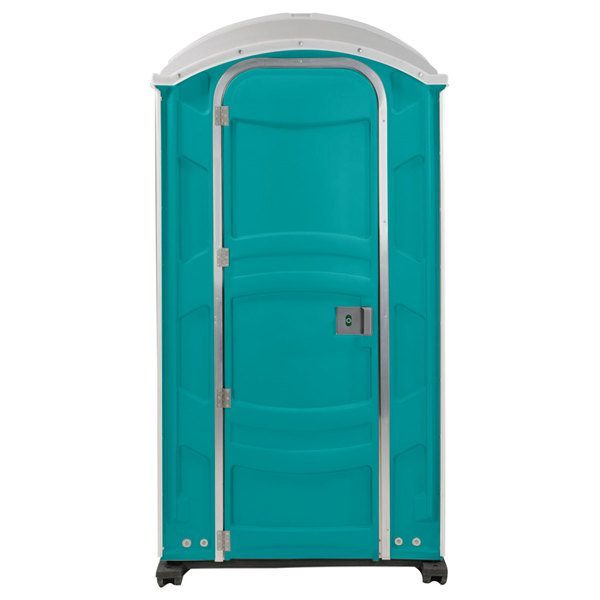
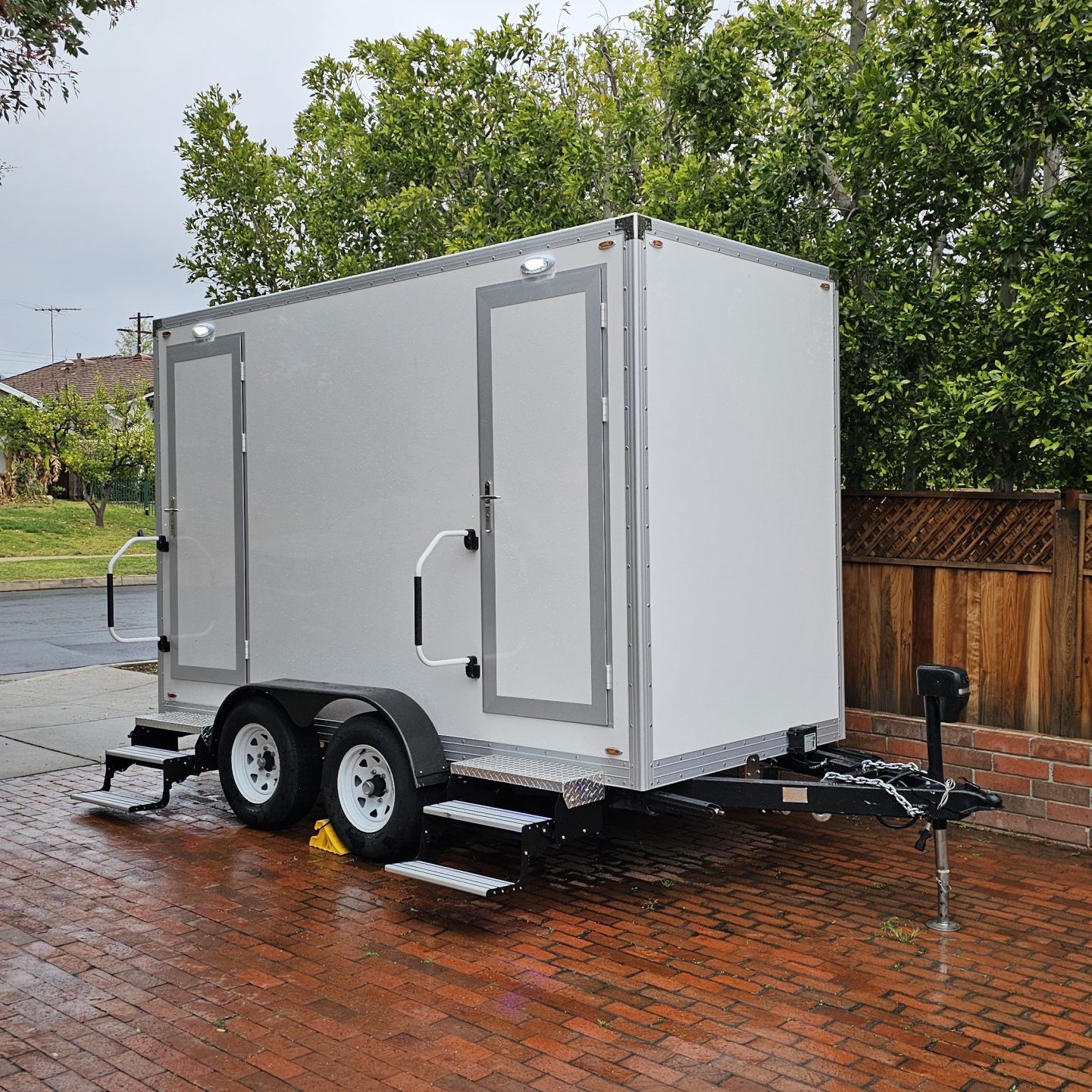
All Site Rentals provides portable restrooms, ADA-compliant units, luxury restroom trailers, and handwashing stations for festivals across Los Angeles and greater California. With 30+ years of experience and on-time delivery guaranteed, they're a one-stop option for compliant, professionally serviced festival sanitation.
Conclusion
A well-run festival leaves the site cleaner than it found it, hits its diversion targets, passes every inspection, and gives attendees restrooms they don't dread walking into.
None of that happens by accident. It happens because someone made good decisions early: locking in a permitted hauler before the permit deadline, writing vendor packaging rules into contracts before load-in, sizing sanitation correctly.
Festival waste management in LA in 2026 is genuinely manageable. The regulatory stack is navigable, the logistics are plannable, and the vendors who've done this hundreds of times already know exactly what your site needs.
All Site Rentals has supported California festivals for over 30 years – portable restrooms, handwashing stations, temporary fencing, power poles, and more. Tell us about your event and we'll build the right quote around it.