

OSHA Bathroom Requirements (2026 Breakdown)
OSHA Bathroom Requirements (2026 Breakdown)
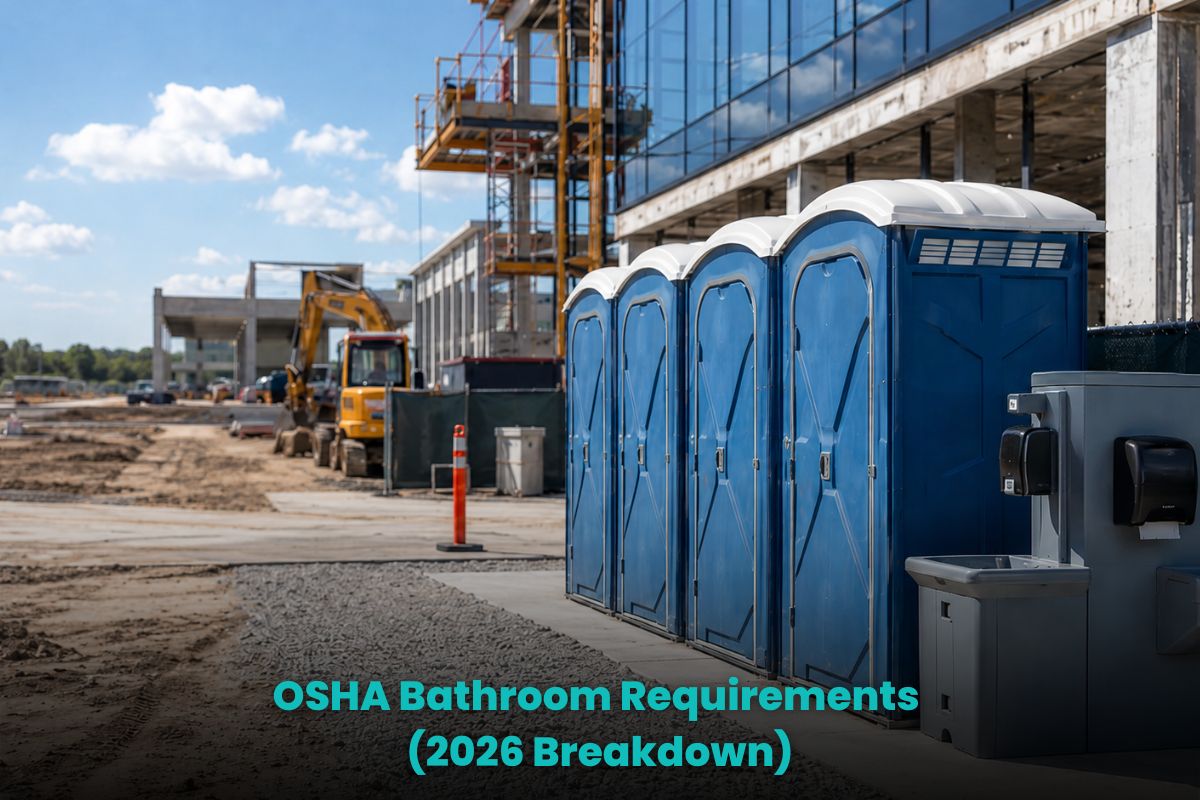
OSHA bathroom requirements touch more variables than most employers expect – workforce size, industry type, site conditions, break policies, and state-level overlays all factor in.
California adds its own layer on top of federal rules, and the details carry real compliance weight.
We’ll cover all of it: minimum toilet counts, porta potty rules, break policies, cleaning standards, and what LA and California employers need to know.
Key Notes
- Portable toilets are legally compliant only when sanitary, stable, and paired with handwashing access.
- Unreasonable restroom restrictions are an OSHA violation regardless of how many units you have.
- California employers must meet Cal/OSHA standards – stricter than federal on distance, privacy, and counts.
Who Do OSHA Restroom Requirements Apply To?
OSHA bathroom requirements apply to the vast majority of employers in the United States. The exact standard depends on your industry, but the obligation to provide toilet facilities is nearly universal.
There are three separate federal standards:
- General industry (offices, warehouses, factories, retail, healthcare) – governed by 29 CFR 1910.141
- Construction worksites – governed by 29 CFR 1926.51
- Agriculture (field hand-labor operations) – governed by 29 CFR 1928.110
Most private employers fall under either federal OSHA or a state-run plan like Cal/OSHA in California. Being a small business doesn't exempt you – the rules apply based on your industry and activity, not your headcount.
The One Narrow Exception Is Agriculture:
Small farming operations with 10 or fewer employees and no temporary labor camp in the prior 12 months are exempt from enforcement under OSHA's field sanitation rule.
That exemption disappears the moment you hit 11 workers or operate a labor camp.
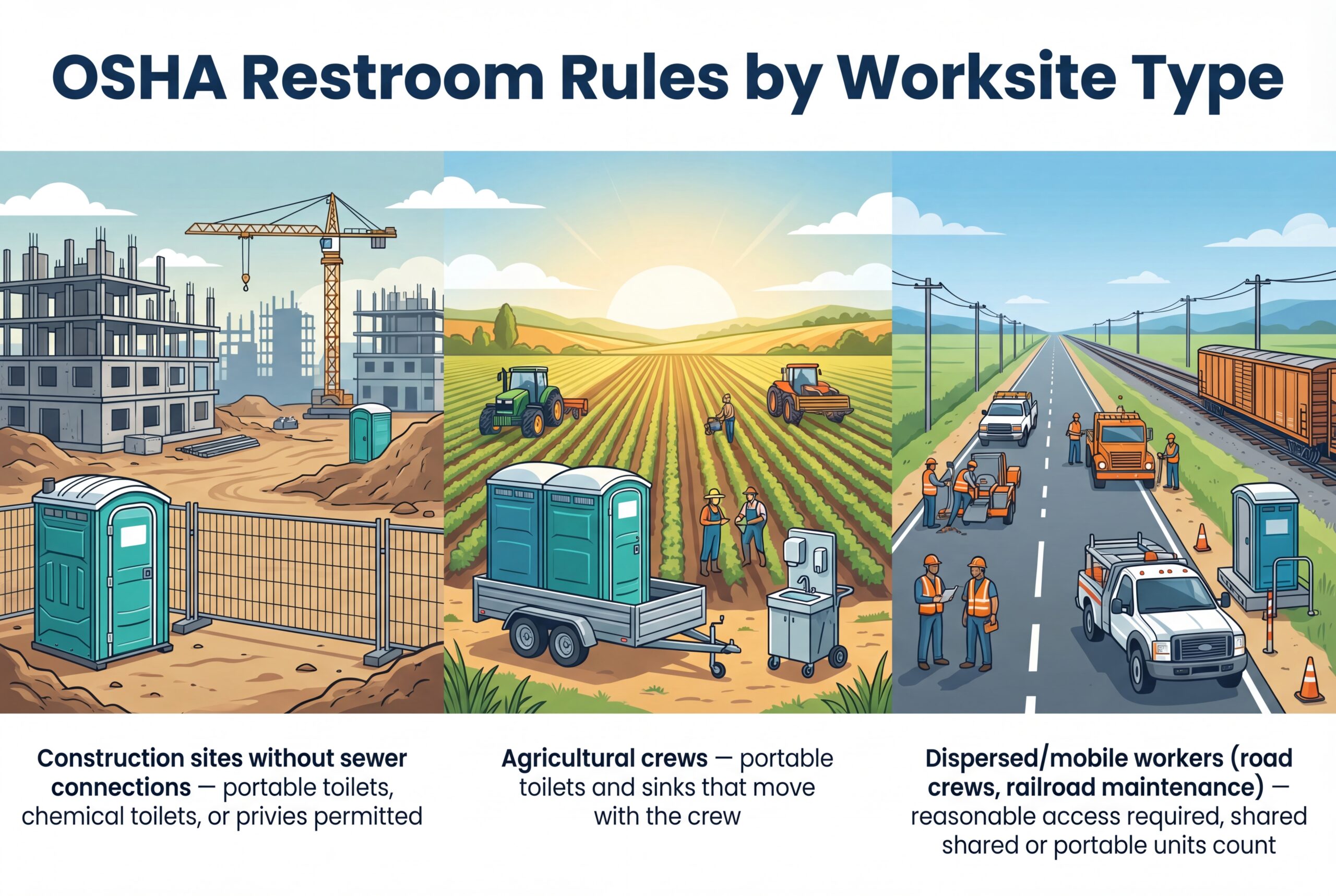
What About Mobile or Temporary Worksites?
Temporary and remote worksites are still covered – OSHA just allows more flexibility in how you comply.
OSHA Toilet Requirements: Minimum Number of Toilets per Employee
The most-asked question on this topic is straightforward: how many bathrooms per employee does OSHA require?
The answer depends on whether you're in general industry or construction.
General Industry (29 CFR 1910.141)
| Employees | Minimum Toilets |
| 1–15 | 1 |
| 16–35 | 2 |
| 36–55 | 3 |
| 56–80 | 4 |
| 81–110 | 5 |
| 111–150 | 6 |
| Over 150 | +1 per every additional 40 employees |
Construction Sites (29 CFR 1926.51)
| Workers On Site | Requirement |
| 20 or fewer | 1 toilet |
| 20+ workers | 1 toilet seat + 1 urinal per 40 workers |
| 200+ workers | 1 toilet seat + 1 urinal per 50 workers |
A Few Important Calculation Rules:
Mixed-Gender Workforces:
The general industry standard requires you to size men's and women's facilities separately – each based on the number of employees of that sex.
You can't just hit the total number and call it done.
Unisex/Single-Occupancy Restrooms:
A single-occupancy room with a lockable door counts as one toilet toward your minimum, regardless of who uses it. If it has multiple fixtures, only one counts (because only one person can use it at a time).
Calculating Across Shifts:
The tables are based on the maximum number of employees present at one time, not your total headcount across the day.
If you run two non-overlapping shifts with their own facilities, size each to its largest shift. If shifts overlap or share the same restrooms, use peak simultaneous occupancy.
OSHA Bathroom Distance Requirements: What "Reasonable Access" Means
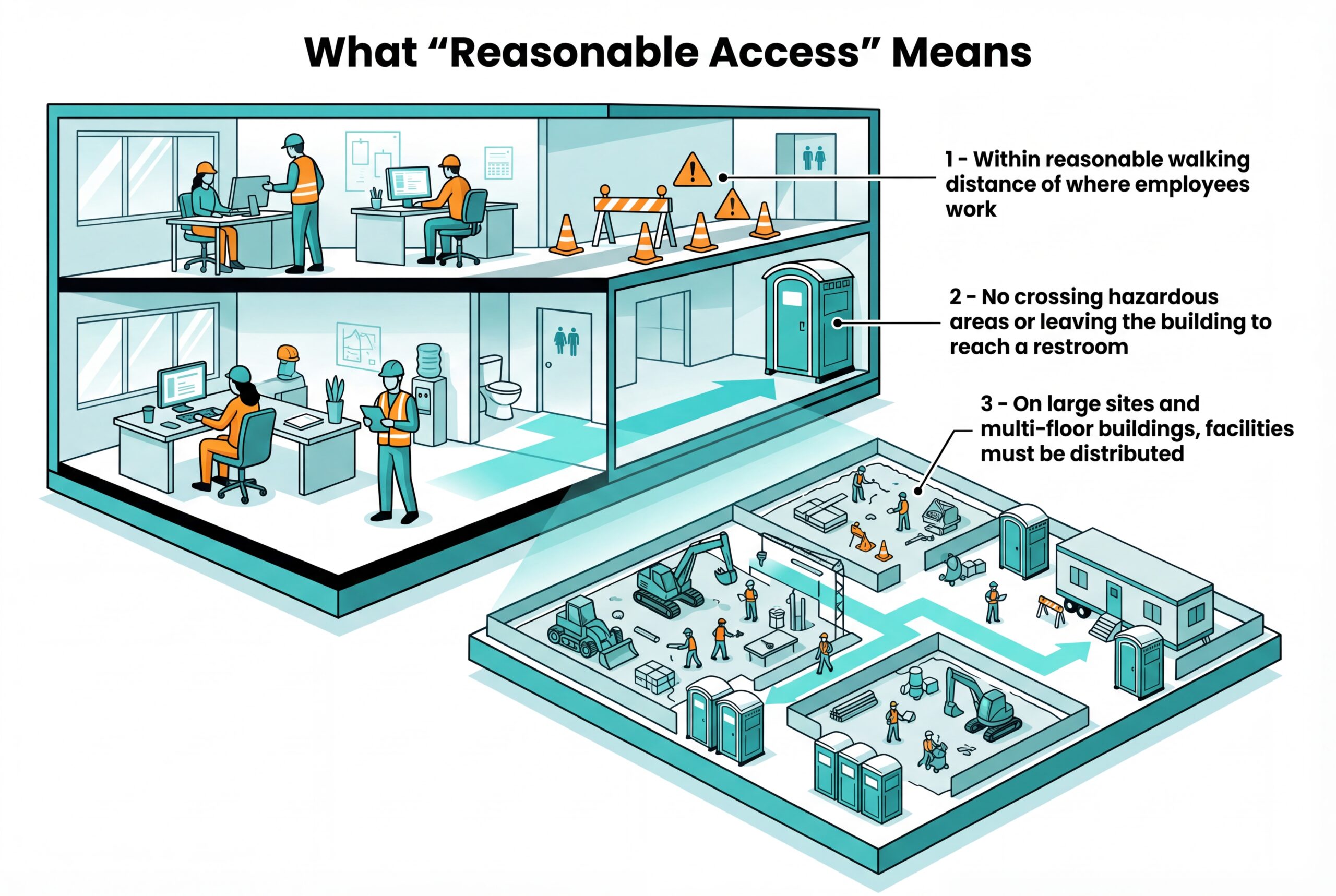
OSHA doesn't set a hard distance number in the federal general industry standard, but that doesn't mean anything goes. The requirement is "reasonable access" which means toilet facilities must be accessible without unreasonable travel or delay during the workday.
For Outdoor And Remote Job Sites:
The standard allows portable facilities, but placement matters. A porta potty parked at the far edge of a large construction site with no clear path isn't meeting the spirit of the rule.
ADA vs OSHA – How They Interact:
OSHA and the Americans with Disabilities Act (ADA) address restrooms from different angles:
- OSHA governs how many facilities you provide and that employees can access them.
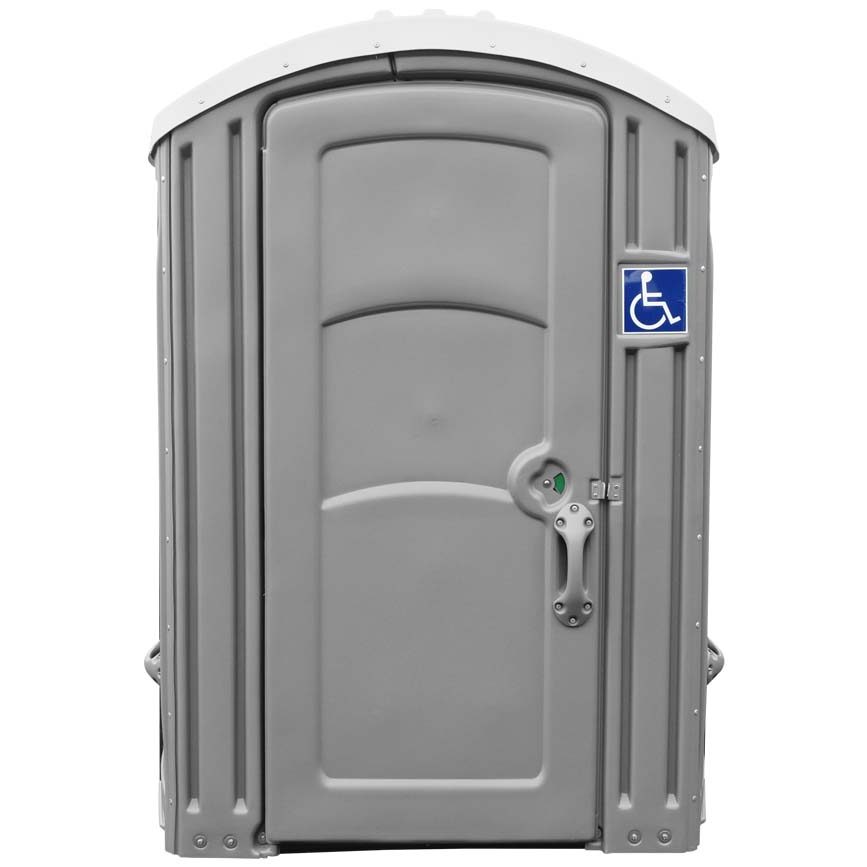
- The ADA governs physical accessibility – door width, turning radius, grab bars, and so on.
You need to satisfy both. Having enough toilets doesn't mean you've met ADA, and having one ADA-compliant stall doesn't offset a shortage in overall count.
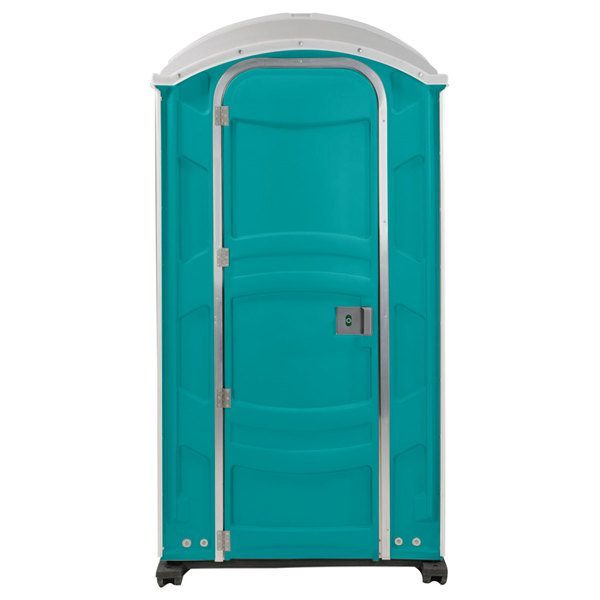
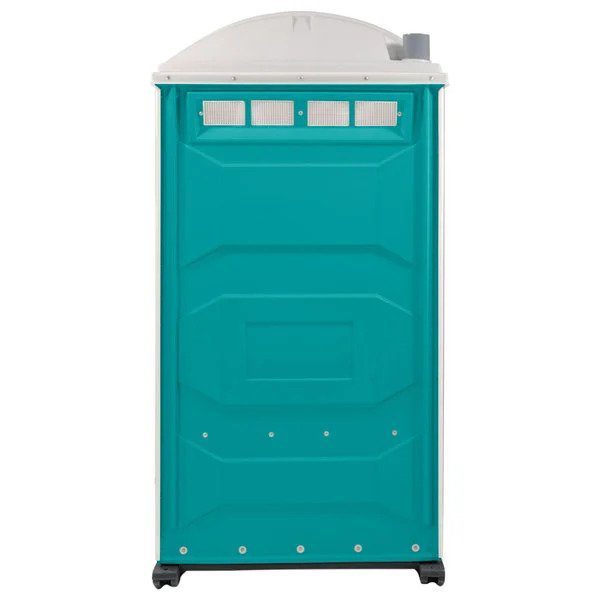
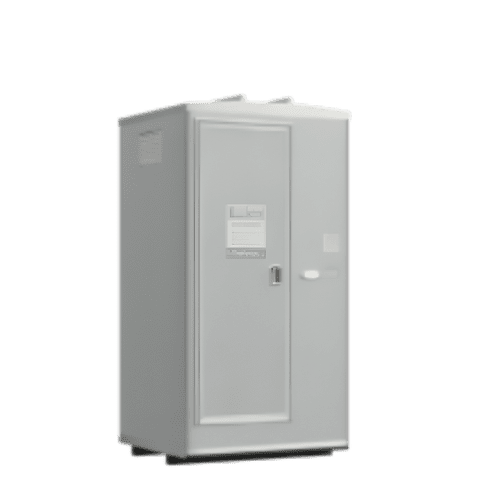
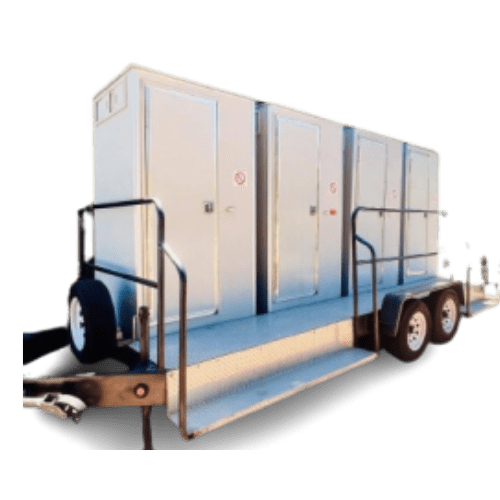
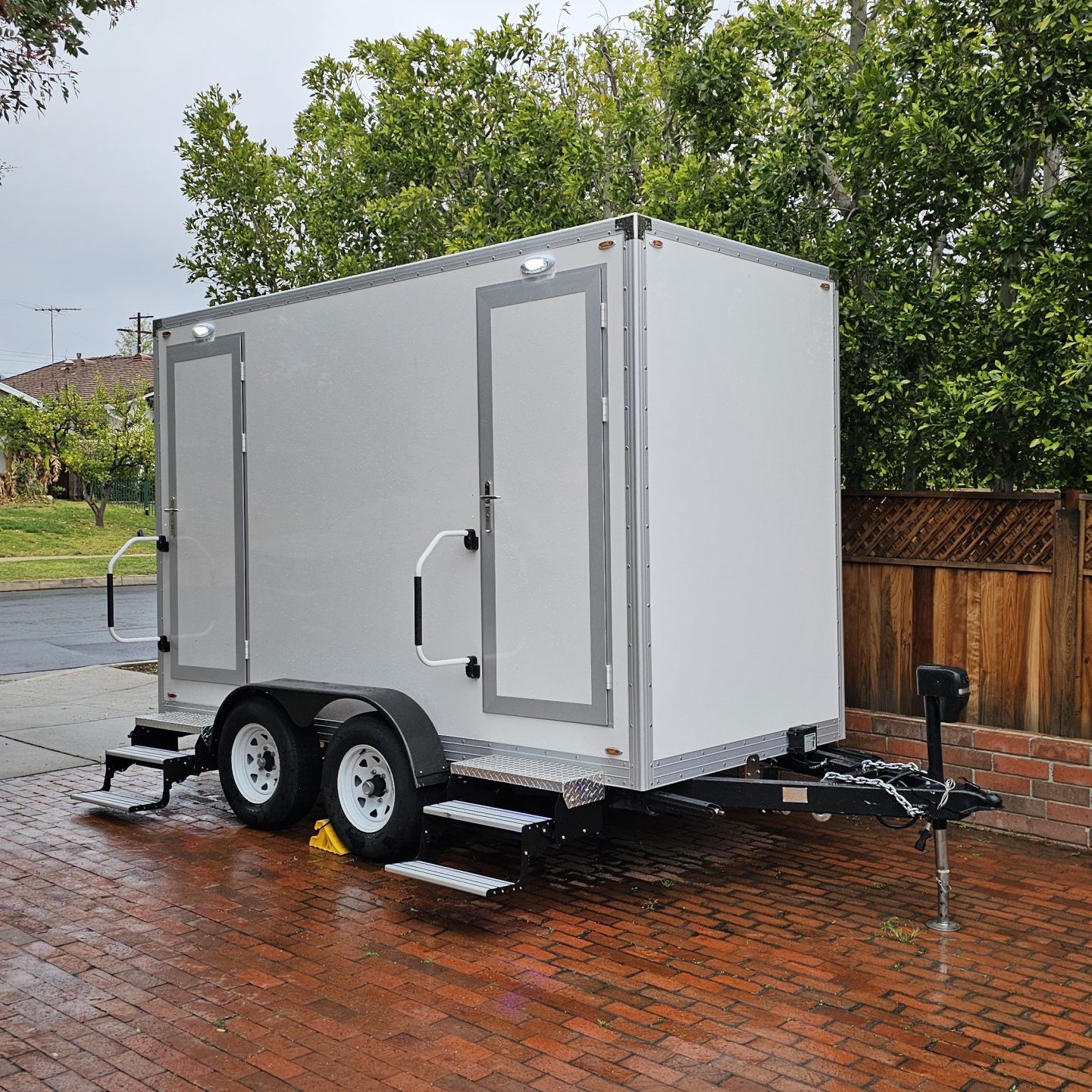
OSHA Porta Potty Requirements On Worksites
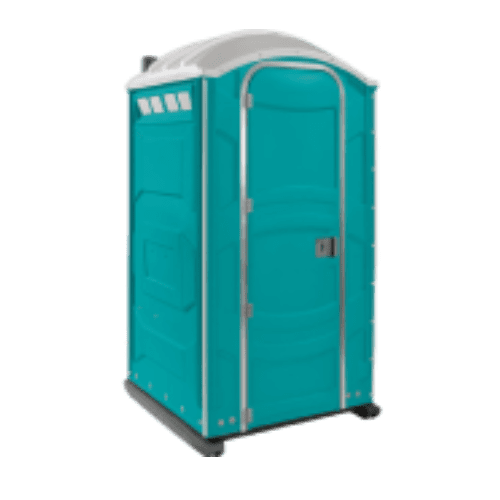
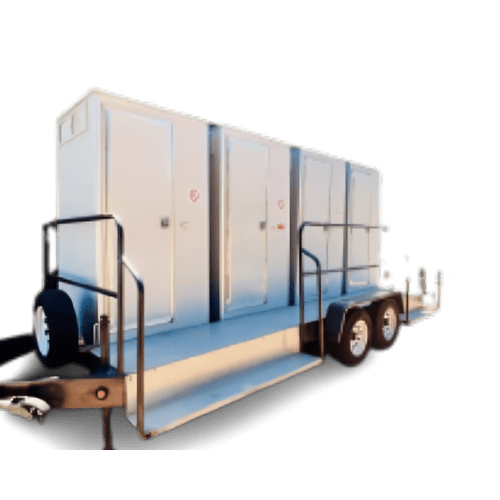
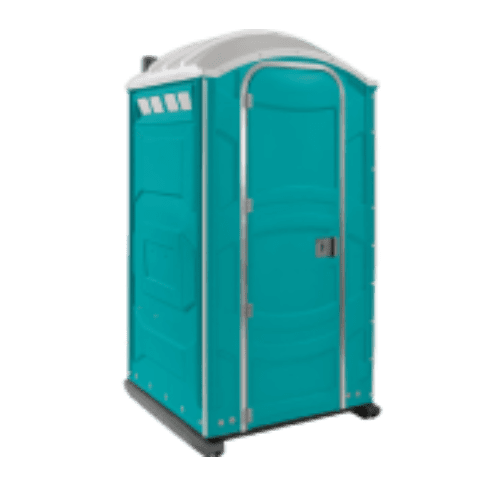
Portable toilets are a legal and widely-used solution for construction sites, remote worksites, and temporary operations. But OSHA porta potty requirements aren't just about hitting a number – condition and setup matter just as much as count.
When Are Portable Toilets Permitted?
Porta potties are an acceptable solution when it's not feasible to connect to a permanent sewage system – which covers most construction sites and temporary work locations.
They are not a default cost-cutting measure for fixed facilities that could have running water.
Key OSHA Porta John Requirements To Know:
- Units must be stable and secured – they cannot be a tip-over hazard.
- Handwashing facilities must be provided alongside porta potties – a portable handwashing station or hand sanitizer dispenser is the standard solution on construction sites.
- Service frequency must be sufficient to keep units clean and sanitary – weekly pump-outs are a common baseline, but high-use sites or hot weather may demand more frequent servicing.
- Placement should be close enough to the work area to be practical, but not positioned where they create a hazard.
OSHA Bathroom Break Requirements: What Employees Are Entitled To
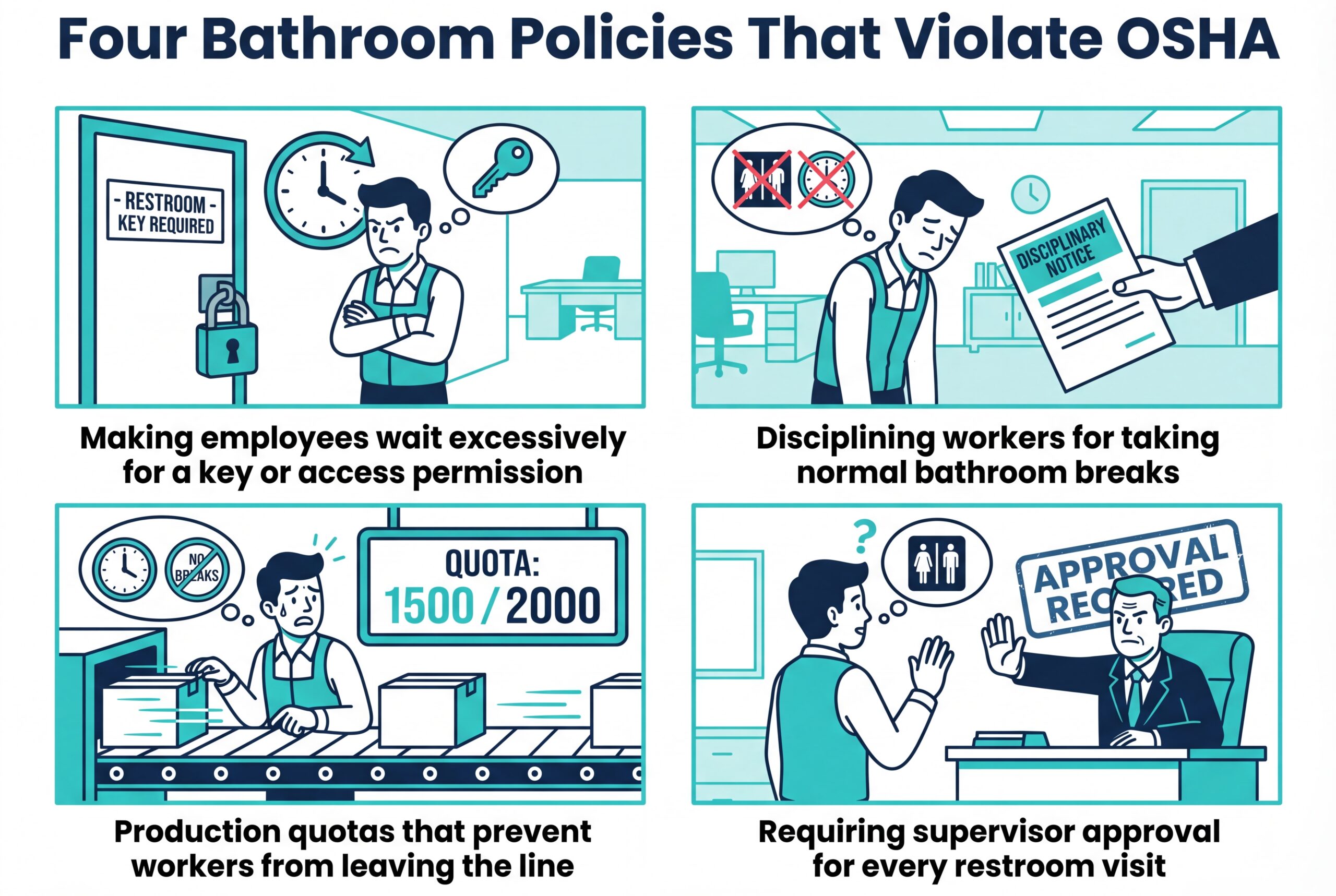
OSHA bathroom break requirements don't prescribe a specific break schedule, but they do establish a clear principle: employees must be permitted to use restroom facilities when they need to.
Unreasonable restriction is a violation – full stop.
What Does "Unreasonable" Look Like In Practice?
OSHA Bathroom Cleaning and Maintenance Standards
Providing toilet facilities isn't enough.
OSHA requires that they be kept clean, sanitary, and in good working order at all times. Dirty, broken, or undersupplied restrooms are a violation even if your unit count is technically correct.
What OSHA Requires Employers To Maintain:
- Toilets and facilities in clean and sanitary condition
- Toilet paper available at all times
- Soap and a means of drying hands (paper towels or a dryer)
- Fixtures in working order – broken toilets must be repaired or replaced
- Adequate lighting and ventilation
Cleaning Frequency Isn't Rigidly Prescribed…
But daily cleaning is the recognized baseline for most workplaces.
High-traffic facilities, portable units, and outdoor worksites should be serviced more frequently – especially in summer heat.
California Employers: What Cal/OSHA & LA Rules Add
Cal/OSHA and local codes layer additional requirements on top, and you must follow whichever standard is more stringent.
Key Cal/OSHA Additions (8 CCR 3364 and 8397.4):
- Toilet counts mirror the federal table but are written directly into California regulations.
- Facilities should be within approximately 200 feet and no more than one floor-to-floor flight of stairs from where employees regularly work.
- Toilets must be vented and equipped with lighting – California is more explicit about ventilation and illumination than the federal standard.
- Multi-toilet rooms must have separate compartments with doors and partitions high enough to ensure privacy.
- Employers must establish and follow a documented servicing schedule for all facilities – sewered and portable.
Construction In California:
Cal/OSHA's construction rule requires at least 1 separate toilet per 20 employees of each sex – more demanding than the federal formula for mid-size crews.
Mobile Crews & Unattended Worksites:
California provides a specific exception under 8 CCR 3360/8397.4 – on-site toilets can be skipped if you provide readily available transportation to nearby clean facilities that meet the other sanitation requirements.
This is a practical relief valve for dispersed crews, but the transportation has to be genuinely accessible, not theoretical.
Los Angeles Specifics:
- LA Municipal Code §41.47.1 prohibits restricting access to restrooms for people with physical disabilities. Even "employee-only" restrooms must be accessible to someone with a disability if accessible alternatives aren't available elsewhere on the premises.
- LA County requires handwashing sinks with hot and cold water, soap dispensers, and individual towels or air blowers in employee toilet rooms at food and similar operations.
- Single-user all-gender restrooms are increasingly recognized as a clean compliance solution in California. They satisfy headcount requirements and meet privacy obligations simultaneously.
OSHA Bathroom Compliance Checklist: How To Audit Your Worksite
Before an OSHA inspection finds the gaps, find them yourself.
Here's what to work through:
Toilet Count
- Identify which standard applies (general industry or construction)
- Count employees by shift and by sex for mixed-gender workforces
- Verify your toilet count meets or exceeds the required minimum (and that every unit is in usable, sanitary condition)
Access & Placement
- Confirm facilities are within reasonable distance of all work areas
- Check there are no barriers – locked doors without a clear access process, hazardous paths, units too far from active work zones
- Verify at least one ADA-compliant unit is available and accessible
Cleanliness & Supplies
- Cleaning schedules documented and followed (daily minimum)
- Toilet paper, soap, and hand-drying means consistently available
- Maintenance records for repairs and portable unit servicing
Bathroom Break Policy
- Written policy confirms employees may use restrooms when needed
- No production quotas, access delays, or discipline practices that restrict normal use
Documentation To Keep On File
- Restroom inventory (locations, types, which workers they serve)
- Cleaning and servicing logs
- Maintenance and repair records
- Written bathroom break policy, with proof employees have been informed
- Records of any complaints and how they were resolved
Ready to Get Your Site Restroom-Compliant?
We've handled 100,000+ projects – we know exactly what your site needs.
Frequently Asked Questions
Is it illegal to not have a bathroom at work?
Yes, failing to provide toilet facilities is a direct OSHA violation and employers can be cited and fined. The only narrow exceptions are small agricultural operations and certain short-duration field work under three hours, and even those come with conditions.
Does OSHA require hand washing stations next to porta potties?
OSHA requires handwashing facilities wherever toilet facilities are provided – portable handwashing stations or hand sanitizer dispensers satisfy this requirement on construction sites and temporary worksites. Skipping handwashing access alongside porta potties is a separate, citable violation from the toilet count itself.
Can an employer lock the bathroom at work?
Locking restrooms during working hours is an OSHA violation if it prevents employees from accessing facilities when needed. Employers cannot use locks, keys, or access controls in a way that creates unreasonable delays or effectively restricts normal restroom use.
How often do porta potties need to be cleaned on a job site?
Portable toilets on job sites must be serviced frequently enough to remain clean, sanitary, and in usable condition – OSHA doesn't prescribe a specific interval, but weekly pump-outs are the recognized industry baseline. High-traffic sites, summer heat, and large crews typically require more frequent servicing to stay compliant.
Conclusion
OSHA bathroom requirements cover more ground than most employers expect – toilet counts by workforce size and industry, distance and placement rules, portable toilet standards, break access rights, cleaning obligations, and an additional layer for California operations.
Getting any one of those wrong is a citable violation, even if everything else checks out.
The real key is treating restroom access as an ongoing operational responsibility, not a one-time setup decision – portable sites especially tend to slip on service frequency and unit condition.
If you're setting up a new site or auditing an existing one, get a free quote and we'll work out exactly what your setup requires.